Atlanta Orthopedic Injury Attorney
An Atlanta orthopedic injury attorney handles cases involving severe bone fractures, joint dislocations, and ligament ruptures. A fractured femur can take six months to heal. A dislocated shoulder may never fully stabilize again. These injuries happen in car crashes, workplace accidents, and slip and fall incidents across Atlanta. Georgia law allows victims to recover medical costs, lost wages, and pain and suffering. The right claim also accounts for surgical hardware, physical therapy, and long-term arthritis risk. A properly structured claim can mean the difference between recovery and lasting financial strain.
Leg, Hip, and Lower Body Fractures
Lower body fractures are among the most common orthopedic injury claims in Atlanta. They range from simple hairline cracks to severe breaks requiring surgical hardware. An Atlanta orthopedic injury attorney documents each fracture type and its treatment path. The goal is to show how the injury affects your ability to work and walk.
Broken Leg
A broken leg can involve the tibia, fibula, or both bones together. Treatment ranges from a simple cast to surgical plates and rods. Most leg fractures require six to eight weeks of non-weight-bearing recovery. Some need months of physical therapy before you return to work. Your attorney documents every medical appointment and rehabilitation session. An Atlanta broken leg attorney ensures the claim reflects your full recovery timeline.
Femur Fracture
The femur is the longest and strongest bone in the human body. Breaking it requires tremendous force, often from truck accidents or high-speed collisions. Surgeons typically use intramedullary nails to stabilize the bone during repair. Recovery takes six months or longer in most cases. Femur fractures carry a higher settlement value because of the severity and long-term arthritis risk.
Tibia Fracture
The tibia is the most commonly fractured long bone in the body. Tibia fractures often result from car accidents when the dashboard impacts the shin. Open tibia fractures require emergency surgery to prevent infection. Closed fractures may need plates, screws, or external fixation devices. Full weight-bearing often takes three to four months after the initial injury.
Fibula Fracture
The fibula is the smaller bone in the lower leg. It often fractures alongside the tibia but can break independently. Stress fractures in the fibula are sometimes missed on initial X-rays. A missed fibula fracture can lead to chronic ankle instability. Your attorney should request MRI imaging if pain persists after a normal X-ray.
Hip Fracture
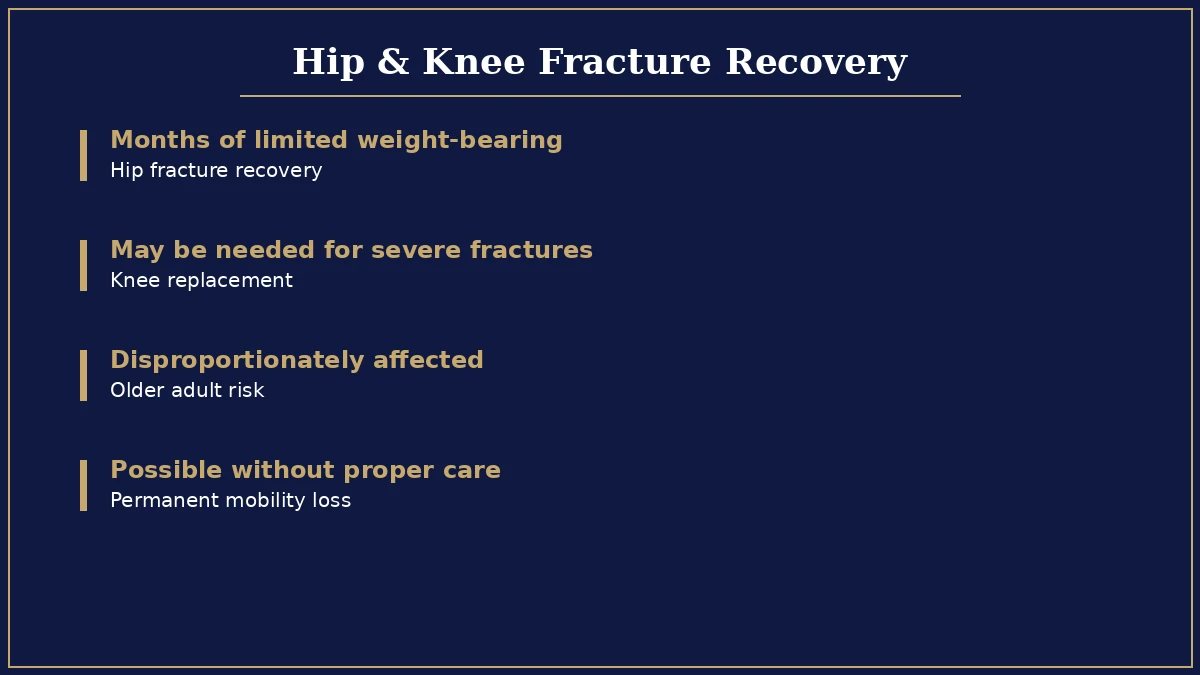
Hip fractures disproportionately affect older adults and often result from slip and fall accidents. Surgical repair may involve hip pinning or partial hip replacement. According to the American Academy of Orthopaedic Surgeons, recovery involves months of limited weight-bearing. Hip fractures can permanently reduce independence and require long-term care arrangements. A hip fracture injury attorney documents the need for home modifications and ongoing assistance.
Hip Bursitis
Hip bursitis involves inflammation of the bursa sac near the hip joint. It can develop after trauma, even without a visible fracture. Insurance adjusters often dismiss bursitis as minor or temporary. However, chronic hip bursitis causes persistent pain and limits mobility for months. Your attorney documents the condition with imaging and specialist reports to prove severity.

Arm, Wrist, and Clavicle Fractures
Arm and upper body fractures affect your ability to work, drive, and perform daily tasks. An Atlanta orthopedic injury attorney pursues compensation for the full recovery period. This includes time when you cannot use the affected limb at all.
Broken Arm (Arm Fracture)
A broken arm involves a fracture of the radius, ulna, or both. Treatment depends on the fracture location and whether the bones are displaced. A displaced fracture requires surgical reduction and often metal hardware. Fractures of the dominant arm affect settlement value more than non-dominant arm injuries. Your attorney documents which arm was injured and your handedness for the claim.
Broken Wrist (Fractured Wrist)
A fractured wrist is one of the most common injuries from bracing against a fall. The distal radius is the most frequently fractured bone in the wrist. Some wrist fractures require surgical pins or plates to align the joint properly. Even after healing, wrist stiffness and arthritis can limit grip strength. An Atlanta bone fracture attorney documents grip strength testing results for the claim.
Broken Clavicle (Clavicle Dislocation)
The clavicle, or collarbone, is commonly fractured in car accidents and falls. Seatbelt force during a crash can fracture the collarbone directly. Most clavicle fractures heal with a sling, but displaced breaks need surgical plates. Clavicle dislocations at the sternoclavicular joint are rarer and more serious. They can compress blood vessels and require emergency treatment.
Broken Collarbone
A broken collarbone often causes a visible deformity at the fracture site. This deformity can be permanent even after the bone fully heals. Recovery typically takes six to eight weeks in a figure-eight sling. Some patients develop a permanent bump at the fracture site. Your attorney documents any cosmetic deformity as part of the claim value.
Elbow Fracture
Elbow fractures can involve the radial head, olecranon, or distal humerus. Even minor elbow fractures cause significant stiffness that lasts months. Some elbow fractures require surgery to remove bone fragments or repair the joint. Long-term loss of extension is common and can affect your ability to work. Physical therapy often continues for three to six months after healing.
Hand and Foot Injuries
Hand and foot injuries may seem minor, but they can permanently affect your ability to work. An Atlanta orthopedic injury attorney documents how these injuries impact your specific job duties and earning capacity.
Broken Fingers
Broken fingers involve fractures of the phalanges in the hand. Finger fractures may seem minor, but they can cause permanent stiffness. A fractured finger that heals improperly can permanently limit grip strength. Treatment ranges from buddy taping to surgical pinning depending on the fracture. Your attorney documents how finger stiffness affects typing, gripping, and fine motor tasks.
Crushed Fingers
Crushed finger injuries often result from workplace accidents involving heavy machinery. These injuries can involve multiple fractures, nerve damage, or amputation. Crushed fingers may require multiple surgeries and months of rehabilitation. Some victims lose the finger entirely due to severe tissue damage. These injuries frequently occur in personal injury accidents involving industrial equipment.
General Hand Injuries
Hand injuries include metacarpal fractures, tendon damage, and ligament sprains. The hand contains 27 bones, making it vulnerable to severe fractures. Tendon injuries in the hand can require surgical repair and months of therapy. Fine motor impairment affects typing, writing, and tool use at work. Your attorney documents specific tasks you can no longer perform at your job.
Broken Foot (Foot Fracture)
Foot fractures involve the metatarsals, calcaneus, or other foot bones. A Lisfranc injury is a specific midfoot fracture that is often missed initially. Missed Lisfranc fractures can lead to chronic foot instability and arthritis. Calcaneus fractures from high falls often require surgical fixation. Recovery may require months in a non-weight-bearing cast or boot.
Ankle Fracture (Fractured Ankle)
Ankle fractures can involve the medial malleolus, lateral malleolus, or both. Bimalleolar fractures involve both sides and almost always need surgery. Trimalleolar fractures are the most severe and require open reduction with plates. Even after surgery, ankle fractures cause long-term instability and arthritis risk. Chronic swelling often persists for months after the cast is removed.
Joint Dislocations
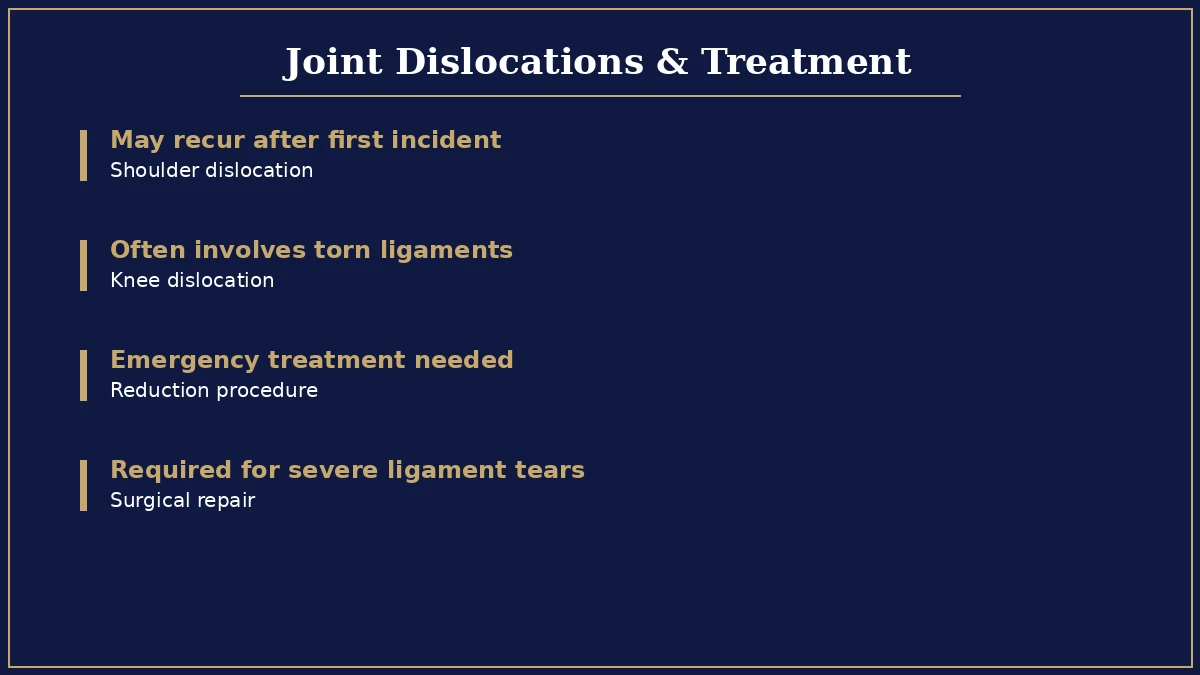
Joint dislocations are painful injuries that can cause lasting instability and nerve damage. A joint dislocation lawyer knows these injuries often require reduction procedures and surgery. Under Georgia law, you deserve compensation for the full recovery period.
Dislocated Shoulder
Shoulder dislocations are the most common joint dislocation in the body. The shoulder’s range of motion makes it inherently unstable. A first dislocation often tears the labrum, leading to recurrent dislocations. Bankart and Hill-Sachs lesions are common shoulder injuries that may require surgery. Your attorney documents the risk of future dislocations and surgical repair needs.
Dislocated Knee (Knee Dislocation)
A knee dislocation is a severe injury that can damage blood vessels. This is not the same as a patellar dislocation, which is less severe. A true knee dislocation often involves torn ACL, PCL, and MCL ligaments. Vascular injury is a risk that requires emergency evaluation. These injuries often result from high-energy trauma like car crashes.
Dislocated Hip
Hip dislocations require extreme force and often occur in high-speed car accidents. The femoral head is forced out of the hip socket. This injury carries a risk of avascular necrosis, where bone dies. Avascular necrosis can develop months after the initial dislocation. Your attorney monitors for this complication throughout the entire claim process.
Dislocated Elbow (Elbow Dislocation)
Elbow dislocations can damage the brachial artery and surrounding nerves. Simple dislocations can be reduced in the emergency room. Severe dislocations may involve fractures of the radial head or coronoid. Long-term stiffness is the most common complication after elbow dislocation. Some patients never regain full elbow extension after a severe dislocation.
Soft Tissue, Tendons, and Ligaments
Soft tissue injuries are often underestimated by insurance adjusters but can be devastating. An Atlanta orthopedic injury attorney works with medical specialists to document the full extent of tendon and ligament damage.
Achilles Tendon Rupture
An Achilles tendon rupture often happens during sudden acceleration or pivoting. The Thompson test helps doctors diagnose a complete rupture. Surgical repair followed by six to nine months of rehabilitation is common. Even after recovery, the repaired tendon remains weaker than before. Your attorney documents the risk of re-rupture and long-term functional weakness.
Ligament Tears
Ligament tears are graded from one to three based on severity. Grade one is a mild sprain, while grade three is a complete tear. ACL and MCL tears in the knee are common in car accidents. Complete ligament tears require surgical reconstruction and months of physical therapy. Your attorney documents the tear grade and surgical repair notes.
Hamstring Tears
Hamstring tears range from mild pulls to complete tendon avulsions. A proximal hamstring avulsion requires surgery to reattach the tendon to the pelvis. Recovery from hamstring surgery takes three to six months. Chronic hamstring weakness affects running, climbing stairs, and prolonged sitting. Your attorney documents how the injury affects your specific work duties.
Groin Tears and Strains
Groin injuries involve the adductor muscles on the inner thigh. They often occur in sports but can result from trauma in accidents. Chronic groin strains can limit walking and physical activity for months. If untreated, groin strains develop into chronic tendonitis. Your attorney documents the injury mechanism and ongoing pain limitations.
Lateral Epicondylitis (Tennis Elbow)
Tennis elbow is inflammation of the tendons on the outside of the elbow. It often develops from repetitive motion at work, not just sports. Workers who develop tennis elbow may have a valid workers’ compensation claim. Under O.C.G.A. § 34-9-80, Georgia requires notice within 30 days. Your attorney helps file the notice correctly and on time.
Elbow Tendonitis (Repetitive Trauma)
Elbow tendonitis from repetitive trauma is a common workplace injury. Assembly line workers, carpenters, and mechanics are at highest risk. The condition develops gradually, making the injury date harder to pinpoint. Insurance companies often dispute the work connection for repetitive trauma claims. Your attorney documents your job duties and the repetitive motions involved.
General Orthopedic Fracture Types
Understanding fracture types helps you understand the value of your claim. An Atlanta orthopedic injury attorney explains how each fracture type affects settlement negotiations and long-term medical needs.
Compound Fractures
Compound fractures, also called open fractures, break through the skin. The Gustilo classification grades open fractures by severity from one to three. Grade three open fractures carry a high infection risk and require multiple surgeries. Severe compound fractures can lead to catastrophic injury outcomes, including amputation. Your Atlanta orthopedic injury attorney documents the Gustilo grade and infection treatment history.
Compression Fractures
Compression fractures affect the vertebrae in the spine. They often result from falls or trauma combined with osteoporosis. A compression fracture can cause height loss and chronic back pain. Multiple compression fractures may require spinal cord injury evaluation. Kyphoplasty is a common surgical treatment for vertebral compression fractures.
Hairline Fractures
Hairline fractures, or stress fractures, are small cracks in the bone. They are often missed on initial X-rays and require MRI detection. Insurance adjusters may dismiss hairline fractures as minor injuries. However, untreated stress fractures can develop into complete breaks over time. Your attorney should request MRI imaging if pain persists after a normal X-ray.
Bone Displacement
Bone displacement occurs when fracture fragments shift out of alignment. Displaced fractures almost always require surgical reduction to realign the bone. Malunion occurs when a displaced fracture heals in the wrong position. Malunion causes permanent deformity and often requires corrective surgery. Your attorney documents displacement on imaging and any malunion complications.
What Compensation Covers for Orthopedic Injuries
Orthopedic injury claims cover more than just the emergency room visit. Compensation should include surgical costs, imaging, physical therapy, and medical equipment. Lost wages during recovery are also fully recoverable under Georgia law. If the fracture prevents you from returning to your job, lost earning capacity applies. Under O.C.G.A. § 51-12-4, Georgia recognizes both economic and non-economic damages. An Atlanta orthopedic injury attorney also pursues damages for pain and suffering. Your Atlanta orthopedic injury attorney ensures every cost is documented, including future hardware removal.
Filing Your Orthopedic Injury Claim in Georgia
Georgia gives you two years from the accident date to file a lawsuit. This deadline is set by O.C.G.A. § 9-3-33. Orthopedic injuries may seem straightforward initially, but complications can develop months later. Infections, failed surgeries, and arthritis often appear after the fracture heals. Under O.C.G.A. § 51-12-33, Georgia follows modified comparative negligence. An Atlanta orthopedic injury attorney begins building your claim immediately. Insurance companies often push for quick settlements before the full extent is known.
Why Humphrey & Ballard Law Handles Orthopedic Cases Differently
Desmond Humphrey and David Ballard represent Atlantans suffering from serious bone fractures and joint injuries. As a Black-owned firm rooted in South Fulton, they understand how a broken bone affects working families. An Atlanta orthopedic injury attorney at Humphrey & Ballard works with orthopedic specialists to document each injury. They demand compensation for surgical hardware, future arthritis treatment, and permanent impairment ratings. They operate on contingency, meaning clients pay nothing unless the firm wins. Catastrophic injury and orthopedic cases share the same commitment to full compensation.
Frequently Asked Questions
| Question | Answer |
|---|---|
| What does an Atlanta orthopedic injury attorney do? | They investigate your accident and document your fracture or dislocation with medical records. They work with orthopedic specialists to pursue compensation for surgery, therapy, lost wages, and pain. |
| How long do I have to file an orthopedic injury claim in Georgia? | Georgia law gives you two years from the accident date under O.C.G.A. § 9-3-33. An Atlanta orthopedic injury attorney can ensure this deadline is met. |
| How much does it cost to hire an Atlanta orthopedic injury attorney? | Humphrey & Ballard Law works on contingency. You pay nothing unless the firm secures compensation for your orthopedic injury claims. |
Get Help From an Atlanta Orthopedic Injury Attorney Today
If you suffered a broken bone, dislocation, or ligament rupture in Atlanta, Humphrey & Ballard Law can help. An Atlanta orthopedic injury attorney on their team will review your case at no cost. Call (404) 446-9854 or visit the contact page to schedule a free consultation. There are no fees unless they win your case.
About Humphrey & Ballard Law
Humphrey & Ballard Law is a Black-owned personal injury firm based in Atlanta, Georgia. Founders Desmond Humphrey and David Ballard serve clients across South Fulton, College Park, Riverdale, East Point, and Fairburn. They also serve the greater Atlanta area. The firm handles orthopedic injury claims, car accidents, truck accidents, and catastrophic injury cases. Clients pay nothing unless the firm wins.
