Atlanta Traumatic Brain Injury Attorney
A traumatic brain injury changes how a person thinks, moves, speaks, and feels. Some brain injuries are visible on a CT scan, like a fractured skull or brain hemorrhage. Others are invisible, hiding in the white matter where standard imaging cannot detect the damage. These injuries happen in car crashes, truck collisions, and serious falls across Atlanta. An Atlanta traumatic brain injury attorney builds a claim that accounts for cognitive impairment, personality changes, and decades of care. Georgia law allows victims to recover medical costs, lost wages, and pain and suffering. The right claim captures damage that standard tests miss.
What Is a Traumatic Brain Injury?
A TBI happens when an external force damages the brain tissue. This includes skull penetration, blunt force, or rapid acceleration and deceleration. A brain hemorrhage involves bleeding within or around the brain. A fractured skull is a break in the cranial bone protecting the brain. A coma is a prolonged state of unconsciousness from severe brain trauma. Not all TBIs involve visible damage on a scan. An Atlanta traumatic brain injury attorney documents both visible and invisible injuries to build the claim.
Open vs. Closed Head Injuries
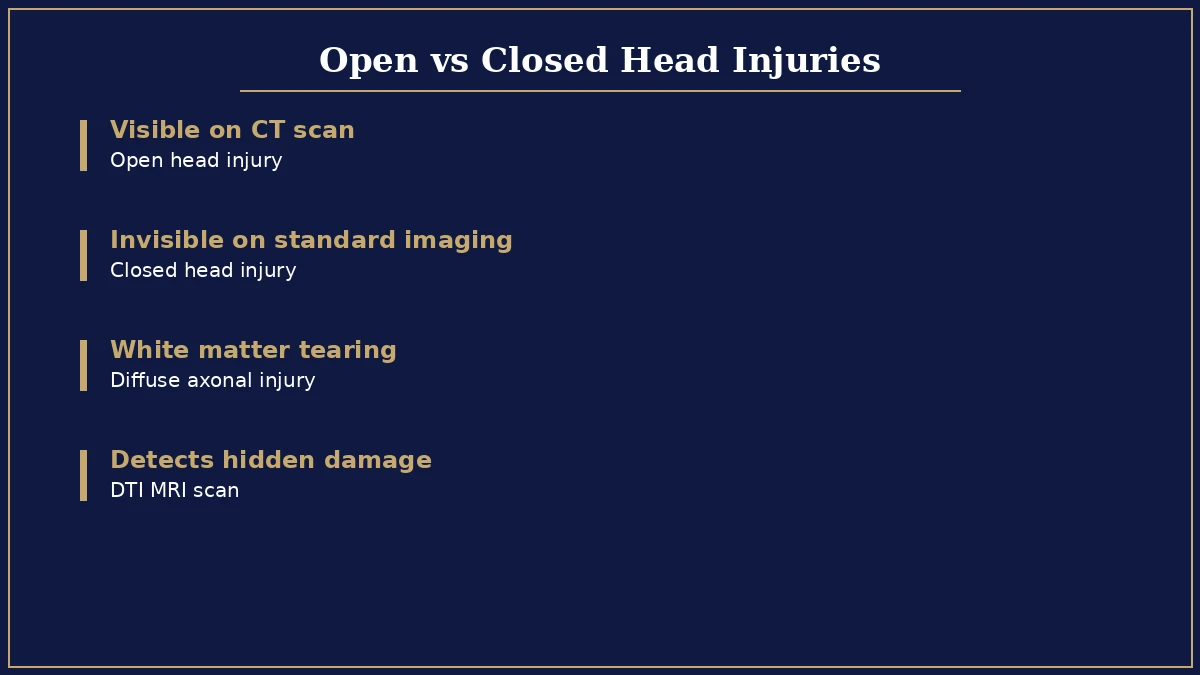
Open head injuries involve a skull fracture or penetration where the brain is exposed. These are immediately visible on standard CT scans in the emergency room. Juries and insurance adjusters understand open head injuries because the damage is obvious. Closed head injuries are fundamentally different. The skull remains intact, but the brain sustains damage from impact or rotational forces. Closed head injuries can be just as severe as open injuries. However, they are harder to prove because the victim looks fine on the outside. Your attorney must use advanced imaging and neuro-psychological testing to demonstrate the damage.
Diffuse Axonal Injury and White Matter Damage
Diffuse axonal injury, or DAI, is one of the most severe closed head injuries. It happens when the brain rapidly rotates inside the skull, tearing nerve fibers. These torn fibers are in the brain’s white matter and cannot be seen on a standard CT scan. DTI MRI, or diffusion tensor imaging, is an advanced scan that shows white matter damage. Insurance companies often refuse to acknowledge DAI because standard imaging looks normal. An Atlanta traumatic brain injury attorney works with neuroradiologists who interpret DTI scans. This specialized imaging is what proves the invisible injury in court. Skull fracture claims and closed head injury cases require different evidentiary approaches.
The Invisible Injury Problem
Many brain injury victims look completely normal to friends, family, and coworkers. The damage hides behind a normal outward appearance. Standard CT scans may show no bleeding or fracture. Yet the victim cannot concentrate, remember names, or control their emotions. Insurance adjusters exploit this gap between appearance and reality. They argue the victim is exaggerating or malingering. Your attorney must bridge this gap with neuro-psychological testing and expert testimony. This evidence translates invisible damage into visible proof for a jury.
Common Causes of Traumatic Brain Injuries in Atlanta
Car accidents are the leading cause of TBI in Atlanta. The sudden deceleration in a car crash causes the brain to strike the skull interior. Truck accidents generate even greater forces due to the size and weight disparity. Motorcycle accidents frequently cause severe head trauma even with a helmet. Slip and fall accidents are a major cause of TBI in older adults. Workplace accidents involving falling objects or construction site hazards also cause brain injuries. Each cause creates a different pattern of brain damage that your attorney must document.
Signs and Symptoms of a Traumatic Brain Injury
Brain injury symptoms fall into three categories: physical, cognitive, and emotional. An Atlanta traumatic brain injury attorney documents symptoms across all three categories. Many symptoms do not appear until days or weeks after the initial injury. This delay makes early medical documentation essential for the claim.
Cognitive Impairment and Memory Loss
Cognitive impairment includes memory loss, difficulty concentrating, and slowed thinking. Some victims cannot remember new information or follow conversations. Executive function may be impaired, affecting planning and decision-making. These deficits may not be obvious in a brief conversation. However, they become apparent during demanding tasks at work or home. Neuro-psychological testing measures cognitive function across multiple domains. Your attorney uses these test results to demonstrate impairment in legal proceedings.
Personality Changes and Frontal Lobe Damage
Frontal lobe damage causes personality changes that devastate families. The frontal lobe controls impulse, judgment, and emotional regulation. Victims may develop severe mood swings, aggression, or apathy after the injury. Some lose the ability to feel empathy or control their temper. Spouses often describe the victim as a different person after the injury. These changes strain marriages and relationships permanently. An Atlanta traumatic brain injury attorney fights for compensation covering the family’s loss. This includes loss of companionship, loss of consortium, and the cost of family counseling.
Physical Symptoms and Daily Impact
Physical symptoms include chronic headaches, dizziness, nausea, and sensitivity to light and sound. Some victims experience seizures after a traumatic brain injury. Sleep disturbances are common and can persist for months or years. Fatigue affects the ability to work, drive, and perform daily tasks. Balance problems increase the risk of further injury from falls. Your attorney documents how physical symptoms limit daily functioning and employability.
The “Mild” TBI Defense and Insurance Tactics
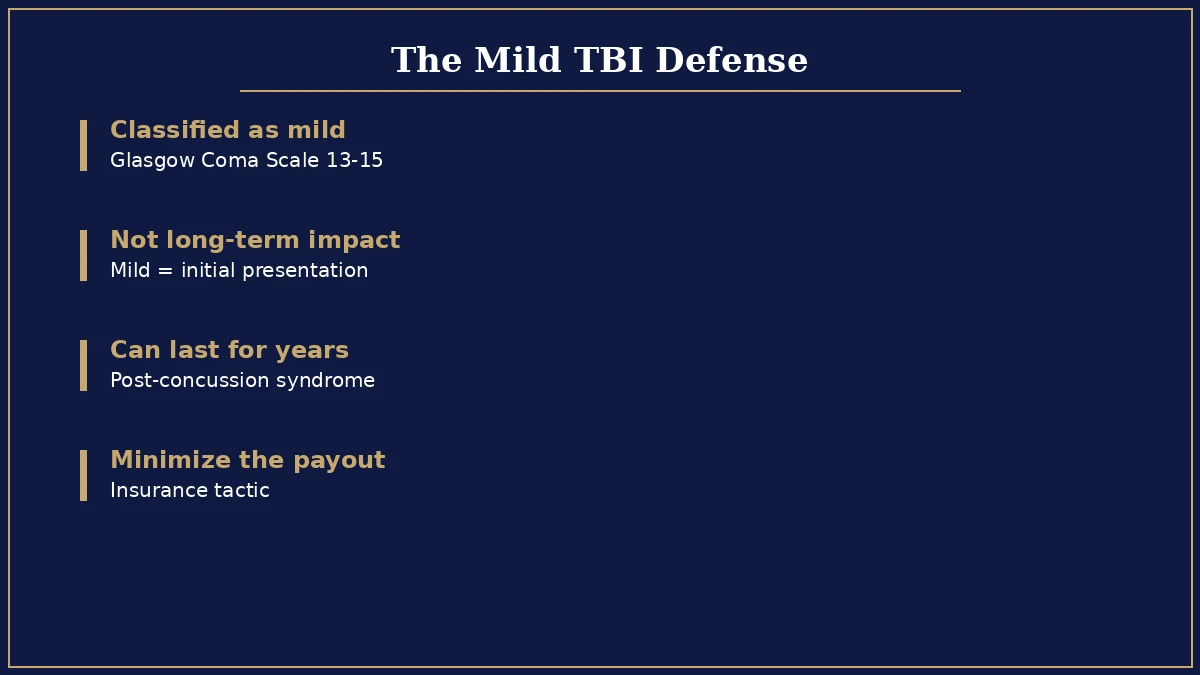
Insurance defense lawyers classify severe concussions as “mild” TBIs to minimize payouts. The term “mild” in medicine refers only to the initial presentation in the emergency room. It does not describe the long-term impact on the victim’s life. An Atlanta traumatic brain injury attorney aggressively challenges this classification. A concussion classified as “mild” can still cause permanent cognitive and emotional damage.
Why “Mild” Does Not Mean Minor
The Glasgow Coma Scale scores brain injuries as mild, moderate, or severe. A score of 13 to 15 is classified as “mild.” However, this scale measures only the initial level of consciousness. It does not predict long-term outcomes or quality of life. Many patients with “mild” TBI scores develop post-concussion syndrome lasting years. Some never fully recover their cognitive function or emotional stability. Insurance companies exploit the word “mild” to argue the injury is minor. Your attorney presents evidence showing the gap between the initial score and the actual life impact.
Post-Concussion Syndrome as a Lifelong Condition
Post-concussion syndrome involves persistent symptoms lasting months or years after a concussion. Symptoms include chronic headaches, dizziness, sleep disturbances, and sensitivity to light. Some victims experience cognitive difficulties that prevent them from returning to work. Post-concussion syndrome can last indefinitely, affecting every aspect of daily life. The condition may worsen over time rather than improve with treatment. Your attorney documents the progression of symptoms through medical records and neuro-psychological evaluations. Insurance companies often classify these as “mild” injuries to minimize the payout.
Life Care Plans and Medical Economics
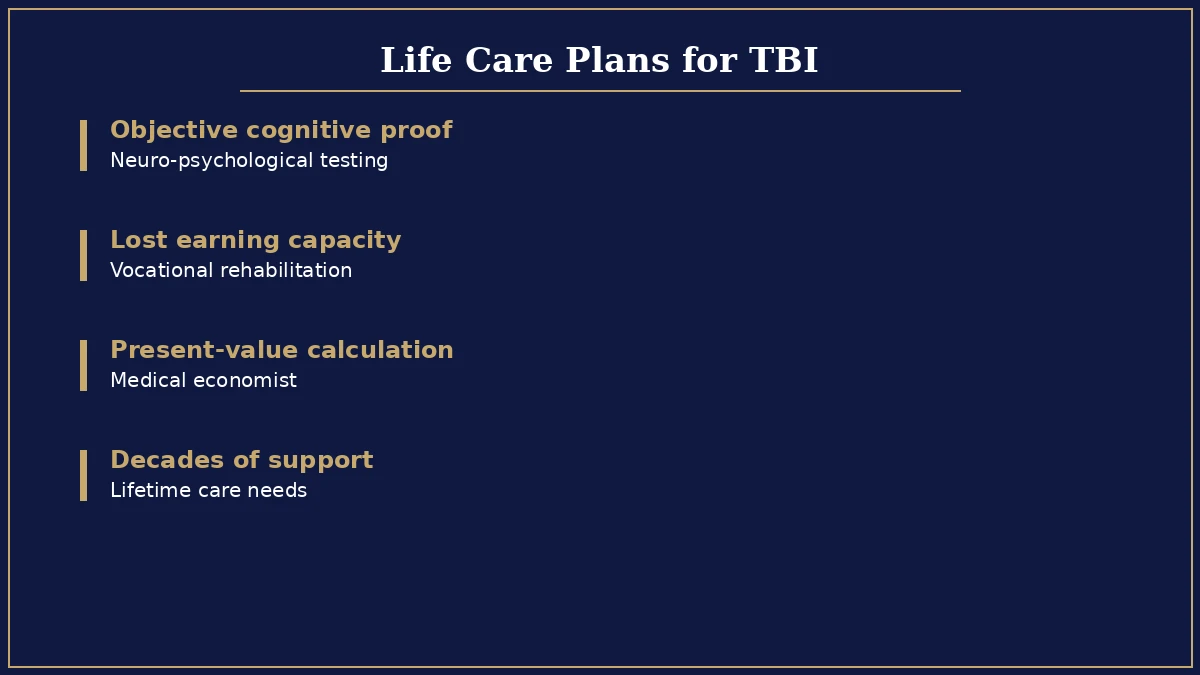
Brain injuries require 24/7 care, memory care facilities, and occupational therapy for decades. Humphrey & Ballard Law does not guess a settlement number. An Atlanta traumatic brain injury attorney on their team hires neuro-psychologists, vocational rehabilitation experts, and medical economists. These specialists calculate a Life Care Plan that spans the victim’s natural life expectancy. This plan documents every future medical need, therapy session, and accommodation required. Catastrophic injury and TBI cases both require this level of economic analysis.
Neuro-Psychological Testing
Neuro-psychological testing is the gold standard for documenting brain injury. A neuro-psychologist administers hours of standardized tests measuring memory, attention, and executive function. The results compare the victim’s performance to healthy individuals of similar age and education. This comparison reveals deficits that cannot be seen on imaging or in conversation. Insurance companies cannot dismiss neuro-psychological test results as subjective complaints. Your attorney uses these objective test scores to prove cognitive impairment in court.
Vocational Rehabilitation and Lost Earning Capacity
A vocational rehabilitation expert evaluates whether the victim can return to their previous job. The expert considers cognitive limitations, physical restrictions, and the job requirements. If the victim cannot return to their previous occupation, the expert identifies alternative work options. The difference between pre-injury and post-injury earnings is the lost earning capacity. This figure is calculated over the victim’s expected working lifetime. Your attorney presents this calculation as part of the Life Care Plan.
Calculating Lifetime Care Costs
A medical economist converts the Life Care Plan into a present-value dollar amount. This includes future medical procedures, therapy, medication, and assistive care. It accounts for inflation and the victim’s life expectancy. The calculation also includes the cost of home modifications and adaptive equipment. Some brain injury victims require around-the-clock care for the rest of their lives. Your attorney ensures the settlement covers decades of care, not just the first year.
Why TBI Cases Require a Specialized Attorney
Brain injury cases are not like typical personal injury claims. The damage is often invisible, the symptoms develop over time, and insurance companies exploit every gap. An Atlanta traumatic brain injury attorney understands the medicine behind the injury and the law behind the claim.
Causation Disputes
Insurance companies often dispute the connection between the accident and the brain injury. They argue the symptoms predate the crash or result from a prior condition. Your attorney must establish causation through medical records, expert testimony, and imaging results. This requires working with neurologists who can connect the mechanism of injury to the specific damage. Timing is essential. Symptoms documented in the first 48 hours carry more weight than those reported weeks later.
Long-Tail Damages
Brain injury damages extend far beyond the initial hospital stay. Some symptoms do not appear until months after the accident. Cognitive decline, personality changes, and progressive deterioration can develop over years. A settlement reached too early will not cover future medical needs. Your attorney documents the full trajectory of the injury before agreeing to any settlement. This may require waiting months to see how symptoms progress.
Compensation Available in Atlanta TBI Cases
TBI compensation covers emergency medical care, rehabilitation, and long-term support. Under O.C.G.A. § 51-12-4, Georgia recognizes both economic and non-economic damages. Economic damages include medical bills, therapy costs, and lost wages. Non-economic damages include pain, suffering, and loss of enjoyment of life. An Atlanta traumatic brain injury attorney also pursues compensation for loss of consortium. This covers the impact on the victim’s relationship with their spouse. Personal injury claims involving TBI require detailed life care planning to calculate full damages.
Georgia Laws That Apply to TBI Claims
Several Georgia statutes directly affect brain injury claims. An Atlanta traumatic brain injury attorney ensures compliance with each requirement.
Statute of Limitations, O.C.G.A. § 9-3-33
Georgia gives you two years from the accident date to file a lawsuit. This deadline is set by O.C.G.A. § 9-3-33. Brain injuries may seem stable initially but worsen over time. Filing before the deadline preserves your right to pursue full compensation.
Modified Comparative Fault, O.C.G.A. § 51-12-33
Georgia follows modified comparative negligence under O.C.G.A. § 51-12-33. If the victim is 50% or more at fault, they cannot recover damages. Insurance companies often argue the victim was partially at fault to reduce the payout. Your attorney builds evidence minimizing the victim’s fault percentage.
Workers’ Compensation and Third-Party Claims
Workplace brain injuries may involve both a workers’ compensation claim and a third-party claim. Workers’ comp covers medical bills and partial lost wages regardless of fault. A third-party claim against a negligent contractor or equipment manufacturer can recover full damages. These claims are separate and require distinct legal strategies.
What to Do After a Traumatic Brain Injury in Atlanta
Seek emergency medical attention immediately, even if symptoms seem mild. Ask for a CT scan and mention all symptoms to the attending physician. Follow up with a neurologist within the first week. Request neuro-psychological testing if cognitive symptoms persist. Document every symptom, missed workday, and appointment in a daily journal. Do not give a recorded statement to the insurance company. Do not sign any settlement offer without consulting an attorney first. An Atlanta traumatic brain injury attorney at Humphrey & Ballard can review your case at no cost. According to the Brain Injury Association of America, early intervention improves outcomes for brain injury recovery.
Frequently Asked Questions
| Question | Answer |
|---|---|
| What does an Atlanta traumatic brain injury attorney do? | They investigate your accident and document brain damage through neuro-psychological testing, DTI imaging, and expert testimony. They build a Life Care Plan covering decades of medical needs and lost earning capacity. |
| How long do I have to file a TBI claim in Georgia? | Georgia law gives you two years from the accident date under O.C.G.A. § 9-3-33. An Atlanta traumatic brain injury attorney can ensure this deadline is met. |
| How much does it cost to hire an Atlanta traumatic brain injury attorney? | Humphrey & Ballard Law works on contingency. You pay nothing unless the firm secures compensation for your brain injury claim. |
| Can a “mild” TBI still be worth compensation? | Yes. The “mild” label refers only to the initial ER presentation, not the long-term impact. Post-concussion syndrome can cause permanent cognitive and emotional damage worth significant compensation. |
Get Help From an Atlanta TBI Attorney Today
If you or a loved one suffered a traumatic brain injury in Atlanta, Humphrey & Ballard Law can help. An Atlanta traumatic brain injury attorney on their team will review your case at no cost. Call (404) 446-9854 or visit the contact page to schedule a free consultation. There are no fees unless they win your case.
About Humphrey & Ballard Law
Humphrey & Ballard Law is a Black-owned personal injury firm based in Atlanta, Georgia. Founders Desmond Humphrey and David Ballard serve clients across South Fulton, College Park, Riverdale, East Point, and Fairburn. They also serve the greater Atlanta area, including brain injury victims in Riverdale. The firm handles traumatic brain injury claims, car accidents, truck accidents, and catastrophic injury cases. Clients pay nothing unless the firm wins.
