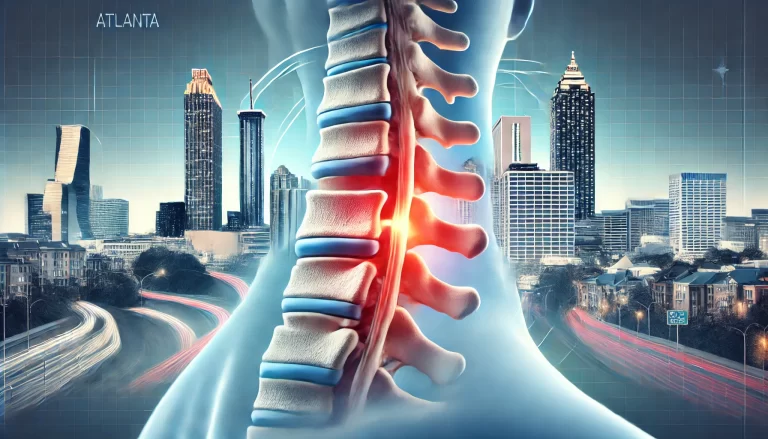
Lumbar radiculopathy is a nerve injury caused when a spinal disc presses on a nerve root in the lower back. The result is radiating pain, numbness, tingling, and weakness that travels from the lower back down through the leg, commonly called sciatica. In accident cases, this condition is caused by the sudden compressive force of a collision. Humphrey & Ballard Law represents Atlanta accident victims suffering from lumbar radiculopathy and fights to ensure insurers take this debilitating condition seriously.
What Causes Lumbar Radiculopathy After an Accident
The lumbar spine absorbs enormous force in any high-impact collision. When a disc herniates or bulges, due to that sudden force, it can press directly on a nerve root exiting the spinal canal. That compression causes lumbar radiculopathy symptoms that can be immediate or develop over days following the accident.
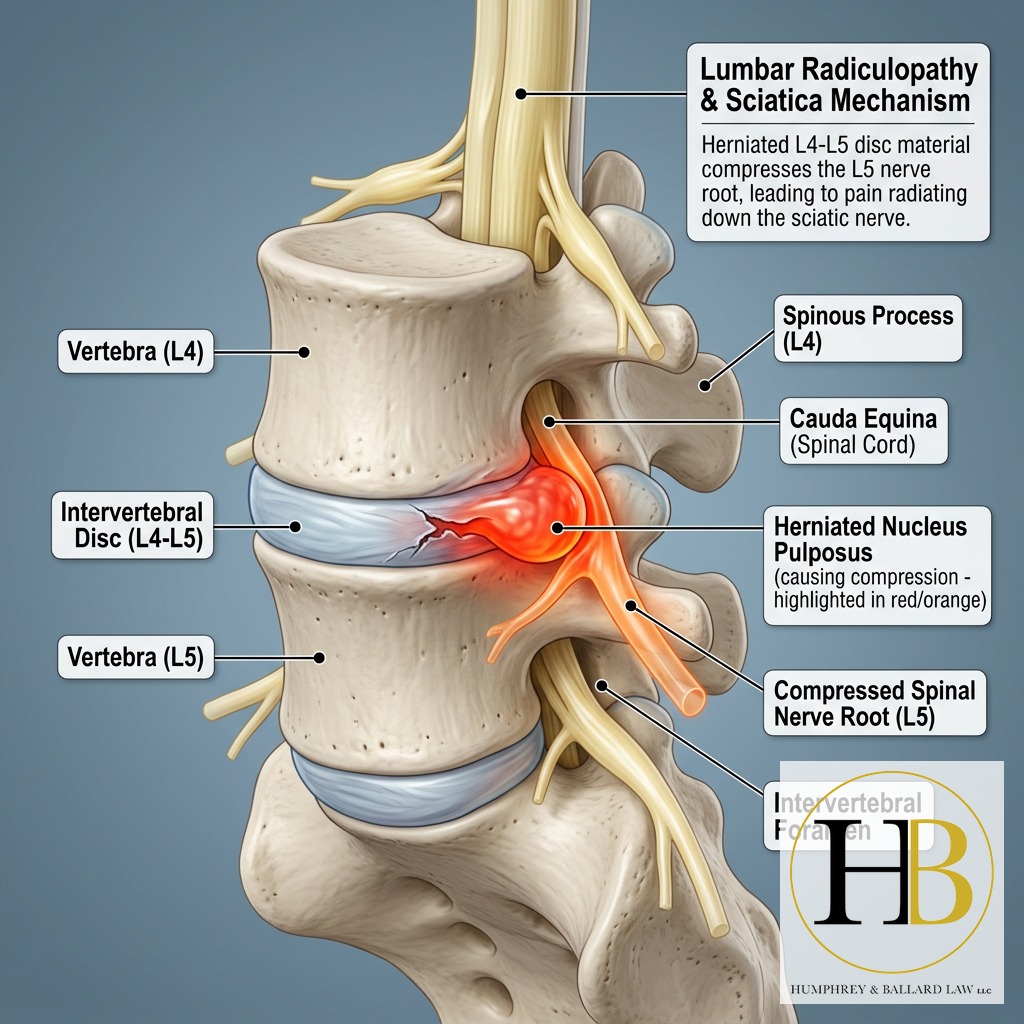
Common accident causes of lumbar radiculopathy include:
- Rear-end collisions, sudden flexion-extension forces compress lumbar discs
- T-bone crashes, lateral impact forces twist and compress the spine unevenly
- Slip and fall accidents, hard landings transfer force directly up through the lumbar vertebrae
- Workplace injuries, heavy lifting accidents, falls from scaffolding, equipment impact
- Pedestrian and motorcycle crashes, high-energy impacts causing disc herniation at multiple levels
Symptoms of Lumbar Radiculopathy You Should Not Ignore
The symptoms of a lumbar radiculopathy injury are distinctive. They radiate, meaning the pain does not stay in one place but travels along the path of the affected nerve. Many accident victims dismiss these symptoms early, which delays diagnosis and can worsen the condition significantly.
| Symptom | Where It’s Felt | Nerve Level |
|---|---|---|
| Sharp radiating pain | Lower back into buttock and thigh | L3,L4 |
| Sciatica | Buttock, down the back of the leg to the foot | L4,L5 / L5,S1 |
| Numbness and tingling | Leg, foot, or toes | L4,S1 |
| Muscle weakness | Hip flexors, quadriceps, or calf muscles | L3,L5 |
| Foot drop | Inability to lift the front of the foot when walking | L4,L5 |
“Lumbar radiculopathy caused by an accident is not just back pain. It is nerve damage. It affects how you walk, how you sleep, and how you work. We make sure insurance companies and juries understand the full scope of what our clients are living with.”
, Humphrey & Ballard Law
Diagnosis and Treatment for Accident-Related Lumbar Radiculopathy
Diagnosing lumbar radiculopathy after an accident requires imaging and neurological evaluation. An MRI is essential, X-rays alone will not reveal disc herniation or nerve compression. The North American Spine Society’s clinical guidelines recommend MRI as the first-line imaging tool for suspected lumbar radiculopathy.
Treatment options range from conservative to surgical depending on severity:
- Physical therapy, targeted exercises to decompress the nerve and strengthen supporting muscles
- Epidural steroid injections, reducing nerve inflammation for pain management
- Chiropractic care, spinal manipulation to relieve disc pressure
- Microdiscectomy, surgical removal of the disc material pressing on the nerve
- Spinal fusion, for severe or recurrent cases with structural instability

Building a Strong Lumbar Radiculopathy Injury Claim in Georgia
Insurance companies frequently argue that lumbar radiculopathy is a pre-existing condition or a natural result of aging. Countering this requires building a clear timeline, from the accident to the onset of symptoms to the confirmed diagnosis. Our Atlanta car accident attorneys work closely with spine specialists to establish causation and present your case with authority.
Critical evidence in a lumbar radiculopathy claim includes:
- MRI and CT imaging, confirming the specific level of disc herniation and nerve compression
- EMG / nerve conduction studies, objective proof of nerve dysfunction
- Treatment records, showing consistent care from immediately after the accident
- Spine specialist testimony, linking the mechanism of injury to the diagnosed condition
- Functional capacity evaluations, documenting work limitations caused by the injury
The CDC’s data on back pain and disability confirms lumbar conditions are among the leading causes of long-term functional impairment, making proper documentation of your claim essential from the start.
Frequently Asked Questions, Atlanta Lumbar Radiculopathy Claims
| Question | Answer |
|---|---|
| Is lumbar radiculopathy a permanent injury? | It can be. Many patients recover fully with treatment, but some develop chronic nerve damage, permanent weakness, or recurring flare-ups that last years. |
| Can I get compensation for sciatica after a car accident? | Yes. Sciatica caused by accident-related disc herniation is a compensable injury in Georgia. You can recover medical costs, lost wages, and pain and suffering. |
| How do I prove my lumbar radiculopathy was caused by an accident? | MRI imaging, EMG results, your treatment timeline, and expert spine testimony are the primary tools. Starting medical care immediately after the accident is critical. |
| What is the average settlement for lumbar radiculopathy in Georgia? | Settlements vary widely by severity and treatment required. Cases involving surgery or chronic disability typically result in significantly higher recoveries. |
Don’t Let Nerve Damage Go Uncompensated
If an accident left you with lumbar radiculopathy, radiating leg pain, or sciatica, Humphrey & Ballard Law is ready to help. Call (404) 875-7800 or visit our contact page to speak with an Atlanta lumbar radiculopathy attorney today, for free.
About Humphrey & Ballard Law
Humphrey & Ballard Law is an Atlanta personal injury firm led by Desmond Humphrey and David Ballard. The firm represents seriously injured clients across Metro Atlanta in car accident, slip and fall, workplace injury, and catastrophic injury cases. All cases are handled on a contingency basis, no fee unless we win.