You trusted the rules. You rode on the designated bike path. You wore a helmet. You did everything right. Then a distracted driver crossed into your lane and hit you at 35 miles per hour.
Now you’re facing months of recovery, thousands in medical bills, and uncertainty about whether you’ll ever ride again. The driver’s insurance company is offering you $3,000 — maybe $5,000 — and hoping you’ll take it and go away quietly. That lowball offer doesn’t cover your hospital bills, doesn’t replace your lost wages, and doesn’t account for the fact that you might never ride a bike safely again.
You need a bicycle injury lawyer Atlanta. You need someone who understands that cyclists aren’t second-class road users — you’re protected by the same traffic laws (FMCSA guidelines) that protect drivers, and when someone hits you, they’re liable for 100% of your damages. At Humphrey & Ballard Law, we fight for bike accident victims every day. We’ve recovered hundreds of thousands in settlements for cyclists who were hit by negligent drivers, and we know exactly how much your case is worth.
Why Bicycle Accidents Are Different From Car Accidents
When a car hits a bicycle, the physics are brutal. A person on a bike has no metal cage protecting them. No airbags. No crumple zones. Just skin, bone, and the asphalt below. That’s why bicycle accidents produce injuries that car-on-car collisions rarely create.
The typical bicycle accident victim is hit from behind or in a side-impact. The rider is thrown off the bike. Their body hits pavement at 25+ miles per hour. Road rash — abrasion injuries across the skin — is almost universal. But road rash is the least of it. The real damage comes from impact injuries: broken bones, head trauma, internal injuries, and spinal cord damage.
The Severity Gap
A car-on-car accident at 30 mph might result in whiplash and a sprained wrist. A car-on-bicycle accident at the same speed produces catastrophic injuries: skull fractures, broken ribs, collapsed lungs, broken legs, and traumatic brain injury. The cyclist’s body absorbs all the force because there’s nothing between them and the vehicle.
This severity gap means bicycle accidents produce lifetime complications that car accidents rarely do. A cyclist who survives a serious hit faces chronic pain, cognitive difficulties from brain injury, and permanent mobility changes. Even recovery timelines are different. A car accident victim might miss 3-6 weeks of work. A bicycle accident victim might miss 6-12 months — or never return to their previous job at all.
Why Drivers Hit Cyclists
The most dangerous driver is the inattentive one. A driver checking their phone doesn’t see the cyclist riding in the bike lane. A driver turning right doesn’t check for bikes in their blind spot. A driver speeding doesn’t have time to react to a cyclist crossing the intersection.
per Georgia Bar Association guidance, According to NHTSA road safety guidelines, Georgia law requires all drivers to maintain a safe distance from cyclists — at least 3 feet when passing. Drivers must yield to cyclists at intersections. Drivers must avoid distractions. When they fail to follow these rules, they’re negligent. And negligence means liability.

Practical rule: If a driver hit you on your bike, the driver is presumed to be negligent unless they can prove you were at fault. That legal presumption means you start from a position of strength in a bicycle accident claim.
Georgia’s Bicycle Laws Protect You (And Give You Legal Leverage)
Many cyclists don’t realize they have the same legal protections as car drivers. Georgia law treats bicycles as vehicles. Cyclists have the right to use the road, to occupy a full lane, and to all the protections that come with that status.
The Three-Foot Rule
Georgia law requires drivers to maintain at least 3 feet of distance when passing a bicycle. If a driver clips you with their mirror, they’ve violated this rule. If they change lanes into your bike lane, they’ve violated this rule. If they pass you with less than 3 feet of clearance, they’ve violated this rule — and that violation is evidence of negligence in your injury case.
Drivers don’t always know this law. Many assume cyclists should be on the sidewalk. Many think cyclists are “in the way” and that hitting them is just bad luck. It’s not. It’s negligence. And the three-foot rule proves it.
Right-of-Way Rules
At intersections, cyclists have the same right-of-way as drivers. If you have a green light and you’re in the crosswalk (on your bike), a car turning right must yield to you. If you have the right-of-way and a driver hits you, that driver is liable — period.
Drivers often assume that because you’re on a bike, you’ll get out of their way. They turn into the bike lane without looking. They run red lights and hit cyclists who have the right-of-way. These are clear violations of Georgia traffic law, and they make the driver 100% liable for your injuries.
Lane Position Rights
In Georgia, cyclists can ride in a full traffic lane if it’s unsafe to ride on the shoulder or in a bike lane. A pothole, debris, or parked cars might make the shoulder unsafe. In those cases, you have the legal right to move into the traffic lane. A driver who hits you while you’re legitimately in the lane is negligent — full stop.
Many drivers don’t understand this. They believe cyclists should always be on the edge of the road. When you move to the center of the lane to avoid hazards, they get angry. Then they hit you. Their anger doesn’t eliminate their liability.
Practical rule: Every time a driver violates a Georgia bicycle law, you have evidence of negligence. Your bicycle injury lawyer uses these violations to prove the driver’s fault and maximize your settlement.
The Hidden Injuries in Bicycle Accidents
Road rash is visible. Broken bones show up on X-rays. But many bicycle accident injuries are hidden — and they’re often the most destructive to your long-term health and earning capacity.
Traumatic Brain Injury (TBI)
Even with a helmet, cyclists suffer brain injuries in serious accidents. The force of impact can cause the brain to move inside the skull, tearing blood vessels and nerve fibers. A concussion is just the starting point. Many cyclists develop post-concussion syndrome — according to CDC traumatic brain injury research, persistent headaches, memory problems, difficulty concentrating, mood changes, and sleep disturbances that last months or years.
Worse: the symptoms often don’t appear immediately. You might feel relatively fine for 24-48 hours, then suddenly develop vertigo, cognitive fog, or anxiety. By then, you’ve already signed a settlement release. A good bicycle injury lawyer ensures you wait until all symptoms are documented before settling.
TBI has lifetime costs. Some cyclists never fully recover their cognitive abilities. Others live with chronic headaches for years. Still others develop post-traumatic stress disorder (PTSD) and never feel safe on a bike again. These costs — lost earning potential, ongoing medical care, psychological treatment — are factored into your settlement.
Spinal Cord Injuries
A hard impact to the back can cause spinal cord damage ranging from minor nerve injury to complete paralysis. Cyclists often don’t realize they have spinal damage immediately — adrenaline masks the pain. But damage that seems minor in the ER often worsens over weeks and months.
Spinal injuries change everything. A delivery cyclist might develop chronic pain that makes cycling impossible. An athlete might lose the ability to run or play sports. A laborer might never return to physical work. The lost earning potential in a spinal cord injury case is enormous — and must be factored into your settlement.

Internal Injuries
Blunt force to the abdomen can cause internal bleeding, organ damage, and digestive issues that develop slowly. A cyclist hit by a car might not realize they have internal bleeding until hours later. By then, more damage has occurred. Internal injuries can be the most expensive to treat and the longest to recover from.
Orthopedic Injuries
Broken bones are common in bicycle accidents. But broken bones in cyclists often create permanent problems that broken bones in car accident victims don’t. A broken collarbone might heal into a bad position, limiting arm mobility forever. A shattered ankle might never fully regain strength, ending an athlete’s career. A broken wrist might develop arthritis, making fine motor tasks painful for the rest of your life.
Practical rule: Don’t settle a bicycle accident claim until you’ve fully healed and all long-term impacts are clear. Hidden injuries often emerge weeks or months after the accident. Your lawyer makes sure you wait until the full picture is visible before accepting any settlement offer.
How Your Bicycle Injury Lawyer Calculates Damages
Insurance companies lowball bicycle accident claims because they assume cyclists are less valuable than drivers. They think: “It’s just a bike accident.” “The rider was vulnerable anyway.” “We’ll offer $5,000 and move on.” That thinking is wrong — and a skilled bicycle injury lawyer makes them pay.
Economic Damages (Hard Numbers)
Medical expenses: emergency room, surgery, hospital stays, physical therapy, ongoing treatment. Keep every receipt. Document every medical visit. These numbers are concrete and impossible to dispute.
Lost wages: If you can’t work because of your injuries, every day of lost income is a direct economic loss. If you’re a freelancer or self-employed, you document lost business income. If you’re an employee, you provide pay stubs and a letter from your employer confirming your time off. Lost wages compound — six months out of work is six months you’re not building wealth, not contributing to retirement, not advancing your career.
Future medical care: Some bicycle injuries require lifelong treatment. Chronic pain, physical therapy, medications, ongoing imaging — these add up. An expert can project future medical costs over your lifetime and include that in your settlement demand.
Loss of earning capacity: If the accident permanently reduced your ability to earn, that’s damages. A construction worker with chronic back pain might only be able to do light-duty work at a much lower wage. A cyclist with PTSD might be unable to return to delivery work. The difference between your pre-accident earning potential and your post-accident earning capacity is a direct economic loss.
Non-Economic Damages (Pain and Suffering)
This is where bicycle accident cases get their real value. Non-economic damages include pain and suffering (the daily physical pain from your injuries), emotional distress (PTSD and anxiety), loss of enjoyment of life (inability to participate in activities you loved), disfigurement (permanent scars), and permanent disability (lifetime limitations on activities).
Non-economic damages in bicycle accidents often exceed economic damages. A cyclist who can’t ride, who has PTSD, and who has permanent pain might recover $50,000+ in non-economic damages alone. An experienced bicycle injury attorney knows how to present these damages to insurance companies and juries in a way that maximizes settlement value.
| Damage Category | Description | Typical Range |
|---|---|---|
| Medical Expenses | Emergency care, surgery, hospitalization, rehabilitation | $10,000–$100,000+ |
| Lost Wages | Income lost during recovery period | $5,000–$50,000+ |
| Pain & Suffering | Physical pain from injuries and recovery | $10,000–$100,000+ |
| Emotional Distress | PTSD, anxiety, fear of future cycling | $5,000–$75,000+ |
| Loss of Enjoyment | Inability to participate in activities you loved | $10,000–$50,000+ |
| Future Medical Care | Lifetime costs of ongoing treatment | $20,000–$500,000+ |
Practical rule: Your case is worth whatever a reasonable jury would award if the case went to trial. Insurance companies know this. A skilled bicycle injury lawyer uses jury verdicts in similar cases to anchor the settlement negotiation and push the insurance company to a fair number.
Why Insurance Companies Undervalue Bicycle Accident Claims
Insurance companies have a playbook. They use it on every cyclist they encounter. Understanding their tactics helps you push back.
Tactic 1: “You Should Have Worn a Helmet”
Even if you wore a helmet, the insurance company implies that you were somehow responsible for the accident. They suggest that you should have been more visible, ridden faster or slower, or stayed off the road entirely. None of that matters legally. If the driver was negligent, the driver is liable — period. Your safety choices don’t eliminate the driver’s negligence.
Tactic 2: “Bike Injuries Aren’t That Serious”
Insurance companies genuinely underestimate bicycle injuries. They haven’t seen the spiral fractures, the internal bleeding, the traumatic brain injuries. They process dozens of bicycle claims a year and many settle for low amounts, so they assume all bicycle accidents are minor. They’re wrong.
Tactic 3: “Cyclists Deserve It Because They’re Always Breaking Traffic Laws”
This is bias dressed up as legal analysis. Some cyclists do run red lights and weave through traffic. But the driver still can’t just hit them. And most cyclists follow the law most of the time — and when they do, they’re fully protected.
Tactic 4: “Offer a Quick Settlement”
Insurance companies often contact cyclists within days of the accident, while they’re still medicated, still reeling, still unable to think clearly. The company offers a quick check — $3,000, $5,000 — and suggests that accepting it is “simpler” than going through a lawsuit. It’s a trap. Once you cash that check and sign the release, your claim is done. You can never go back for more, even if your injuries are worse than they seemed.
Practical rule: Never accept an insurance company’s initial offer. Wait until you’re fully healed, gather all medical documentation, and have your case evaluated by a bicycle injury lawyer. The difference between a quick settlement and a fair settlement is often $20,000–$50,000+.
Bicycle Accident Settlements in Atlanta: What’s Fair?
Every case is different, but patterns emerge. Here’s what recent bicycle accident settlements in Georgia typically look like:
Minor injuries (road rash, minor fractures, no long-term impact): $5,000–$15,000. These cases settle quickly because liability is clear and injuries are well-defined.
Moderate injuries (broken bones requiring surgery, several weeks of PT, some work loss): $15,000–$50,000. The severity of the break, the duration of recovery, and the amount of work loss determine where in this range the settlement lands.
Serious injuries (permanent disabilities, PTSD, chronic pain, significant work loss): $50,000–$250,000+. These cases take longer to value because the long-term impact isn’t immediately clear. But once the impact is documented, settlements can be substantial.
Catastrophic injuries (paralysis, permanent cognitive impairment, amputation, death): $250,000–$1,000,000+. These cases often go to trial because the damages are so high that insurance companies resist. A jury verdict in a catastrophic case can exceed even these numbers.
The driver’s insurance policy limits matter. If the driver has $100,000 in coverage and your case is worth $300,000, you’re capped at $100,000 (unless you pursue an underinsured motorist claim against your own insurance). This is another reason to hire a bicycle injury lawyer early — we investigate the driver’s insurance and make sure you pursue every available source of recovery.
How to Protect Your Bicycle Injury Lawyer Claim and Document Evidence
The first hours and days after a bicycle accident determine whether your claim succeeds. Here’s what to do:
Immediate Actions (Still at the Scene)
Call 911. Get emergency medical attention, even if you feel okay. Many injuries don’t show symptoms immediately. A hospital visit creates an official record — and that record is crucial evidence in your claim.
Get the driver’s information: name, phone number, address, insurance company, policy number, driver’s license number, and license plate. Take photos of the driver, their vehicle, the damage, and the scene.
Get witness information: names and phone numbers of anyone who saw the accident. Witnesses are gold — they provide neutral accounts that support your version of events.
Take photos of the accident scene: the road conditions, the bike lane, traffic signals, street signs, debris. These photos help recreate what happened and prove negligence.
Get a police report number. The police might not come to minor accidents, but ask for a case number anyway. If they do come, get the officer’s name and badge number.
Medical Care (First Days/Weeks)
See a doctor. Then see a specialist if needed: orthopedist for broken bones, neurologist for head injuries, trauma surgeon for internal injuries. Follow all medical advice. Attend physical therapy. Keep detailed records of every visit, every treatment, every recommendation.
Document your pain and limitations daily. Keep a journal. Write down what hurts, what you can’t do, how long recovery takes. This becomes evidence of your damages.
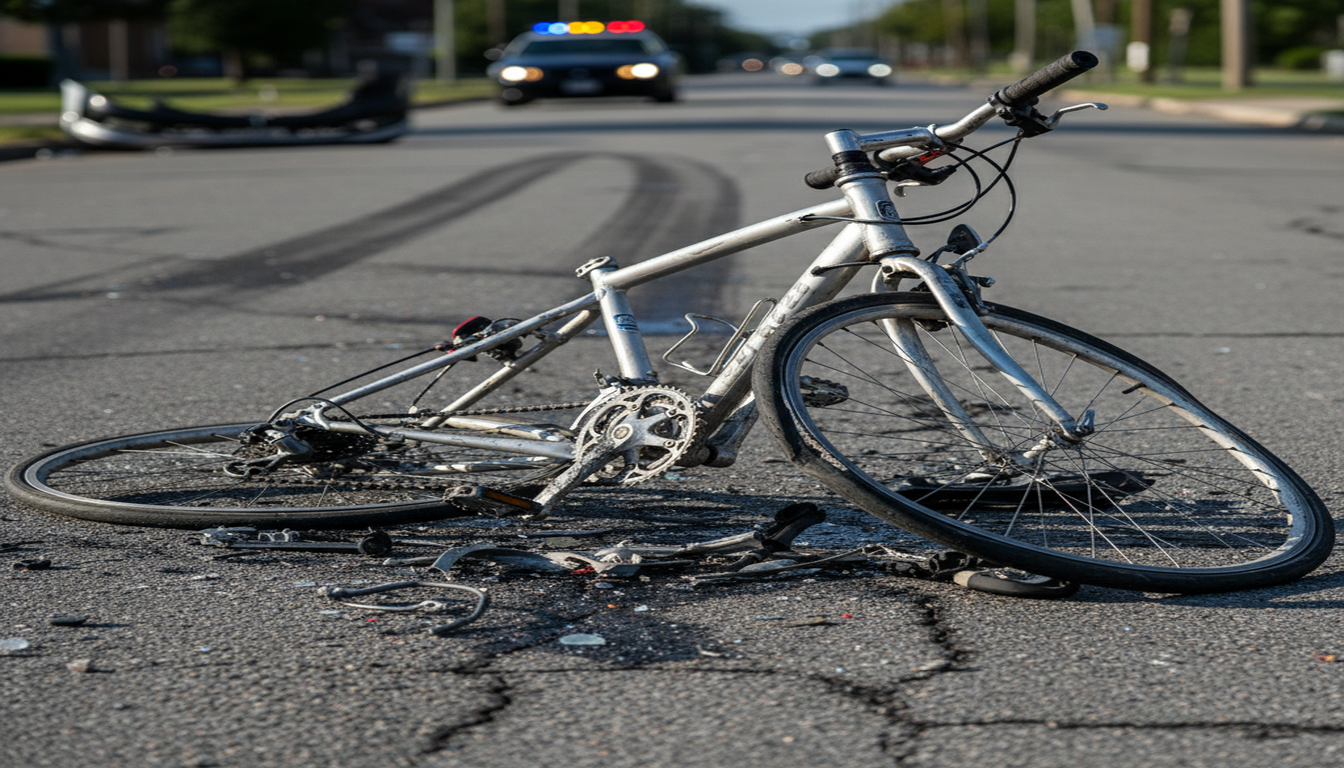
Preserve your bike. Don’t repair it or throw it away. The damage to your bike is evidence of the force of impact. Photographers and engineers use the bike damage to reconstruct the accident.
Legal Actions (Within Days)
Contact a bicycle injury lawyer before you contact the insurance company. Many insurance companies contact cyclists within 24 hours of the accident. Don’t speak to them without a lawyer. Anything you say can be used to minimize your claim.
Your lawyer sends a preservation letter to the driver, their insurance company, and any other potentially liable parties. This letter demands that they preserve all evidence: the driver’s phone records (to check for distraction), traffic camera footage, police dash cam footage, witness statements, medical records, and insurance information.
Get your medical records released to your lawyer. These become the foundation of your case.
Practical rule: The first week after a bicycle accident is critical. Every action you take — or fail to take — affects your claim’s value. A bicycle injury lawyer guides you through this crucial period and makes sure nothing is missed.
What to Expect in Your Bicycle Injury Case
If you hire a bicycle injury lawyer, here’s what your case looks like:
Phase 1: Investigation and Demand (Months 1-3)
Your lawyer investigates. We gather medical records, police reports, witness statements, traffic camera footage, and any other evidence of negligence. We reconstruct the accident using photos, engineer analysis, and traffic pattern data. We identify all potentially liable parties: the driver, their employer (if they were working), the city (if there’s a road hazard involved), and any other negligent party.
We calculate damages: medical expenses, lost wages, future medical care, and non-economic damages. We prepare a demand letter — a formal request for settlement that lays out our case and the amount we’re demanding.
Phase 2: Negotiation (Months 3-6)
We send the demand letter to the insurance company. They respond with a counteroffer — usually much lower than our demand. We negotiate back and forth. Many cases settle in this phase.
During negotiation, we continue gathering evidence. We get expert reports from medical professionals, engineers, accident reconstructionists, or economic experts. These expert reports strengthen our position and push the insurance company toward a better offer.
Phase 3: Litigation (If Necessary)
If the insurance company won’t offer a fair settlement, we file a lawsuit. We conduct discovery — exchanging evidence with the other side. We take depositions of the driver, witnesses, and experts. We prepare for trial.
Most cases settle before trial. But we’re always ready to take a case to a jury. Insurance companies know this. That’s why they settle — because they know they’ll lose at trial.

Phase 4: Recovery and Follow-Up
Once you settle, we make sure you get paid. We coordinate with your medical providers, your employer, and any lienholders. We ensure your settlement covers all your medical bills and debts. We then distribute the remaining funds to you.
Practical rule: From accident to settlement, a serious bicycle accident case takes 6-12 months. The time and effort from a skilled lawyer is what gets you fair compensation instead of a lowball offer.
Bicycle Accident FAQs
| Question | Answer |
|---|---|
| Can I sue a driver for hitting me on my bike? | Yes. If the driver was negligent (violated traffic laws, was distracted, etc.), they’re liable for 100% of your damages. Negligence is presumed unless they can prove you were at fault. |
| What if I wasn’t wearing a helmet? | Georgia doesn’t require helmets for adults, so not wearing one doesn’t eliminate the driver’s liability. Even if you did wear one, helmet use doesn’t impact the driver’s responsibility for negligence. |
| How much is my bicycle accident case worth? | It depends on your injuries, medical costs, lost wages, and non-economic damages. Minor cases settle for $5,000–$15,000. Serious cases settle for $50,000–$250,000+. A lawyer evaluates your specific case to determine its value. |
| Can I settle quickly or should I wait? | Wait until you’re fully healed and all long-term impacts are clear. Many injuries don’t show symptoms immediately. Settling too soon often means missing significant damages that emerge later. |
| What if the driver claims I ran a red light? | Traffic camera footage, witness statements, and police reports can prove what actually happened. Even if you violated a traffic law, the driver still can’t just hit you — they have a duty to avoid hitting cyclists regardless of their traffic violations. |
| Do I need a lawyer or can I handle this myself? | Insurance companies count on cyclists handling cases alone — they offer lowball settlements knowing most people will accept them. A lawyer typically recovers 3-5x more than self-represented cyclists. The attorney’s fee (usually 33% of recovery) is far less than the additional recovery you get. |
| How long does a bicycle accident case take? | From accident to settlement, most serious cases take 6-12 months. The timeline depends on injury severity, medical recovery progress, and whether the insurance company cooperates in negotiations. |
| What if the driver doesn’t have insurance? | You can pursue an uninsured motorist (UM) claim against your own insurance policy. If you don’t have UM coverage, you can still sue the driver personally, though collecting from an uninsured driver is often difficult. |
| Should I post about my accident on social media? | No. Insurance companies and defense lawyers monitor social media. Any posts, photos, or comments can be used to minimize your claim. Keep all accident details offline until your case settles. |
Get Your Full Compensation Today With a Bicycle Injury Lawyer
If you were hit by a car on your bike in Atlanta, don’t accept the insurance company’s lowball offer. You have rights. You have a case. You deserve full compensation for your injuries and losses.
Contact Humphrey & Ballard Law at (404) 446-9854 or visit our free consultation page to get started. Your first conversation with our team is completely free. We’ll review your case, answer your questions, and tell you exactly what your bicycle injury claim is worth.
At Humphrey & Ballard Law, we fight for cyclists. We know the injuries. We know the impact. We know how to make insurance companies pay fair compensation. Let us handle your case while you focus on healing.
Practical rule: Your case is worth far more than the initial offer. An experienced bicycle injury lawyer gets you the full compensation you deserve — and you only pay if we recover for you.
About Humphrey & Ballard Law
Humphrey & Ballard Law is a personal injury law firm serving Atlanta and the greater Georgia area. We specialize in bicycle accidents, car accidents, truck accidents, wrongful death, and other catastrophic injuries. Our attorneys — Desmond Humphrey and David Ballard — have specialized expertise as a bicycle injury lawyer team — have decades of experience fighting for injury victims against insurance companies that try to minimize their claims. We serve clients throughout Georgia with aggressive, compassionate legal representation. When you hire us, you get a team that understands your injuries, values your case fairly, and fights until you get what you deserve.
