You’re stopped at a red light on Peachtree Street in Atlanta when another car hits you from behind, and the driver speeds away. You’re injured, your car is damaged, and you have no way to identify the other driver. A hit and run attorney Atlanta can help you pursue compensation even when the at-fault driver has disappeared. Georgia law requires drivers to stop and exchange information after any accident, and hitting another car and leaving the scene is a criminal offense. But for injured victims, the challenge is different: how do you recover damages from a driver you can’t find? Understanding your options starts with knowing what happened and what Georgia law requires. Compensation is available through multiple pathways, and a dedicated hit and run lawyer Atlanta knows how to access them all.
Understanding Hit and Run Laws in Georgia
Every year in Georgia, thousands of drivers face the nightmare of a hit and run accident. You’re injured, your car is damaged, and the at-fault driver has vanished. The financial and emotional toll is real: medical bills mount, lost wages accumulate, and the sense of injustice intensifies because the person responsible drove away. Victims often feel helpless, believing recovery is impossible once the driver disappears. This belief is wrong. Georgia law provides multiple pathways to compensation, and a dedicated hit and run attorney Atlanta knows how to access every one of them.
A hit and run occurs when a driver strikes your vehicle or person and leaves without exchanging insurance information or calling police. Some hit and runs are deliberate—the driver knows they caused an accident and panics. Others happen in the chaos of an accident when a driver flees the scene due to fear, intoxication, or lack of insurance. In Atlanta and across Georgia, hit and runs are surprisingly common on busy streets, parking lots, highways, and residential neighborhoods. Every year, thousands of hit and run accidents injure innocent victims who did nothing wrong.
Georgia Code § 40-6-270 mandates that all drivers immediately stop at the scene of any accident. They must provide their name, address, telephone number, and insurance information. They must also render reasonable assistance if anyone is injured and call police if injuries are involved. Violating these requirements is a criminal offense. If no one is injured, hit and run is a misdemeanor punishable by up to 12 months in jail and a $1,000 fine. If someone is injured, it becomes a felony with penalties up to 5 years in prison. This harsh criminal penalty reflects Georgia’s serious approach to hit and runs—they’re not just civil infractions; they’re crimes against victims.
The problem: even though the hit and run driver is criminally liable, that doesn’t automatically solve your financial recovery. You still face injuries, medical bills, lost wages, and vehicle damage. This is where a hit and run attorney steps in. We navigate both the criminal prosecution (working with police) and your civil recovery (through insurance and legal claims).
Hit and run cases in Georgia differ fundamentally from typical injury claims. While standard car accident cases involve identified at-fault drivers with clear liability, hit and run claims require you to access your own insurance coverage. This is actually an advantage: uninsured motorist coverage is designed to protect you in precisely this situation, and it applies regardless of whether police ever identify the fleeing driver. Your recovery doesn’t depend on finding the driver—it depends on having the right legal strategy and understanding Georgia’s protections.
Practical rule: Even if police never identify the hit and run driver, Georgia law allows you to recover full damages through uninsured motorist insurance.
What Are Your Options for Compensation?
Many hit and run victims believe they have no recourse if the driver vanishes. This is false. Georgia law provides multiple compensation pathways, and most victims qualify for significant recovery.
Your Own Uninsured Motorist (UM) Coverage
If you carry uninsured motorist coverage (also called UM coverage, similar to car accident coverage) on your auto policy—which Georgia law requires all drivers to carry unless they explicitly opt out—that coverage applies immediately to hit and run accidents. UM coverage is designed precisely for situations where the at-fault driver is unknown, uninsured, or unidentifiable.
UM coverage pays for all medical bills and treatment costs, lost wages and lost earning capacity, pain and suffering, permanent disfigurement or disability, and wrongful death benefits if someone was killed. The coverage applies up to your policy limits. If you have $100,000 in UM coverage, the insurer will pay up to that amount for all your damages combined. Most Georgia auto policies include at least $25,000 in UM coverage, though many drivers carry higher limits.
A hit and run lawyer Atlanta files a claim with your insurer and demands full payment under your UM coverage. This process typically takes 2–6 months from claim to settlement, though some cases move faster if the insurer doesn’t dispute coverage. Most Atlanta-area residents carry UM coverage through companies like State Farm, Allstate, GEICO, or local Georgia insurers. Your attorney works directly with your insurer’s claims adjuster to push for maximum compensation under your policy limits.
Finding and Pursuing the Hit and Run Driver
If police locate the fleeing driver—through traffic cameras, witness identification, or vehicle matching—you can file a claim directly against their insurance. Many hit and run drivers are identified days, weeks, or even months after the accident. When that happens, your attorney files a claim against the at-fault driver’s liability insurance. The recovery then depends on their policy limits, which are often lower than your UM coverage.
This is where having a hit and run lawyer makes all the difference. We pursue every available source: your UM coverage proceeds immediately while we simultaneously investigate the hit and run and push police to identify the driver. If police find the driver months later, we file a claim against their insurance on top of your UM settlement. This layered approach maximizes your total recovery.
Practical rule: Your uninsured motorist claim proceeds immediately, regardless of whether the hit and run driver is ever identified.
What to Do Immediately After a Hit and Run
The first hours and days after a hit and run accident are critical. Your actions now directly determine your ability to recover damages later.
At the Scene: Gather Evidence
Contact emergency services immediately by calling 911, even if the accident seems minor. An official police response creates a critical accident report—documented evidence that the hit and run occurred. The report includes the date, time, location, vehicle descriptions, witness statements, and the responding officer’s observations. This becomes foundational evidence in your insurance claim and any lawsuit.
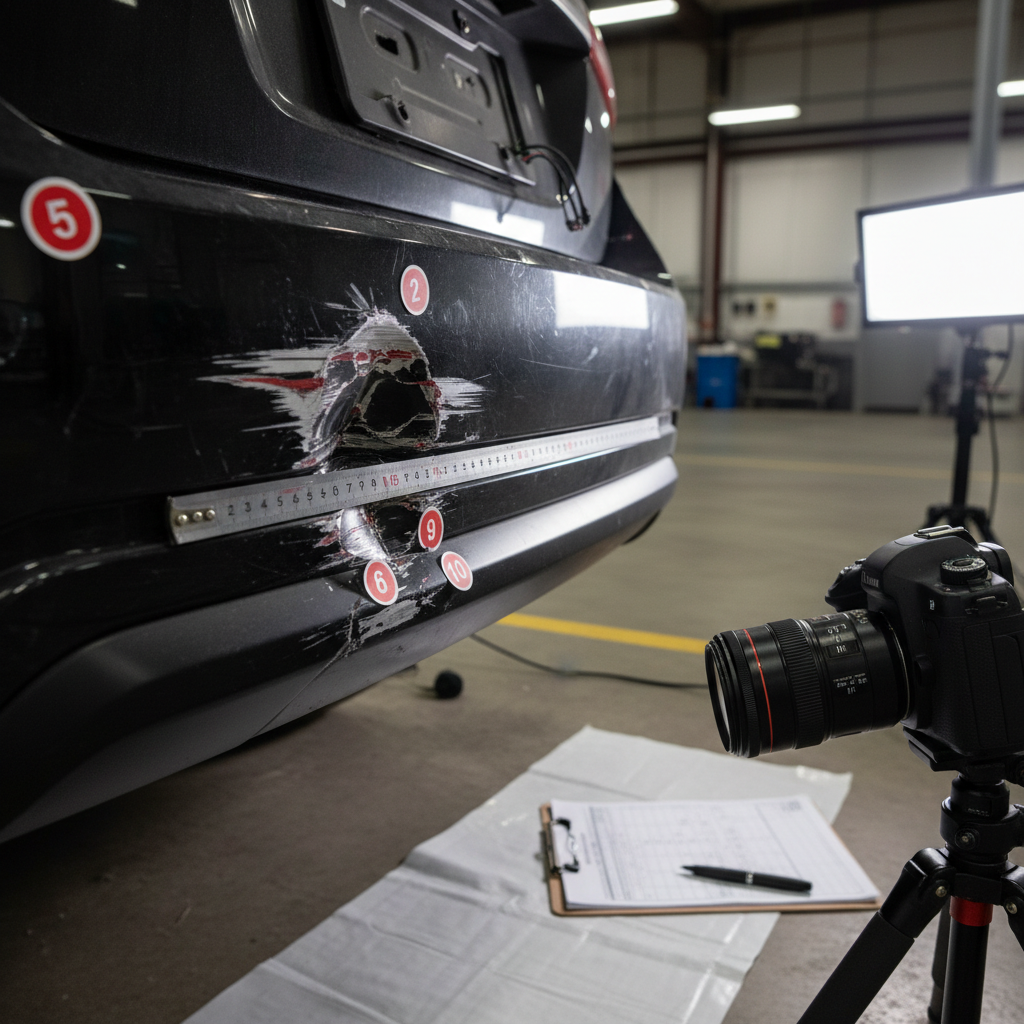
While waiting for police, take detailed photos of all vehicle damage (front, rear, sides, undercarriage if possible). Photograph the accident location, street signs, traffic signals, and nearby businesses with visible security cameras. Document weather conditions, traffic volume, and time of day. Get names, phone numbers, and addresses from every witness (passengers in your car, nearby pedestrians, business employees). Note any visible surveillance cameras in the area (traffic lights, nearby stores, gas stations, ATMs).
For Atlanta-based victims, common hit and run locations include I-75/I-85 merges, Peachtree Street intersections, and parking lots at major retail centers. Wherever the accident occurred, photograph the scene thoroughly. These photos become critical evidence if police eventually locate a suspect vehicle—matching paint, glass, and damage patterns helps establish liability.
Practical rule: Get the police report number before leaving the accident scene—you’ll need it for your insurance claim.
Medical Attention: Document Injuries Early
Seek medical evaluation immediately, even if you feel fine. Adrenaline masks injuries. Whiplash, head trauma, internal injuries, and spinal damage often develop over hours or days. A medical evaluation conducted the same day creates powerful evidence. Hospitals document your condition at baseline, capturing injuries that develop immediately.
Get a complete medical workup including emergency room evaluation, X-rays or imaging if recommended, neurological examination, and any referrals to specialists (orthopedic surgeons, physical therapists, neurologists). Keep all medical records, bills, and test results. Continue documenting injuries with photos as they develop (bruising, swelling, visible wounds). Photograph your pain or functional limitations (inability to lift your arm, difficulty walking, neck immobility).
Insurance Notification: File Your UM Claim
Contact your auto insurance company immediately. Do not wait. Report the hit and run accident and explicitly file a claim under your uninsured motorist coverage. Provide the police report number, date and time of the accident, location, a description of the other vehicle (color, size, body style), any partial license plate information or witness descriptions, your medical evaluation and treatment, and repair estimates for your vehicle.
Practical rule: Filing your UM claim immediately protects your rights and prevents insurers from denying claims due to delayed reporting.
How Hit and Run Claims Work: Expert Legal Explanation
Understanding the process helps you work with police and your attorney effectively. This video walks through how hit and run claims are investigated, how insurance companies handle UM claims, and what to expect from initial report to final settlement.
Comparative Negligence and Liability in Hit and Runs
Georgia law recognizes that accidents often involve partial fault from both parties. Even in a hit and run, you may bear some responsibility. Georgia Code § 13-6-13 applies comparative negligence to all injury claims, including hit and runs.
This means: if police identify the hit and run driver and it turns out you were partially responsible (perhaps you were distracted or jaywalking), your recovery is reduced by your percentage of fault. However, the hit and run driver’s act of fleeing demonstrates consciousness of guilt and significantly increases their comparative negligence. A jury will likely assign higher fault to a driver who fled than to one who stopped and cooperated. Your hit and run attorney will argue this aggressively during settlement negotiations and at trial.
The Investigation: How Police Find Hit and Run Drivers

Police investigation combines technology, legwork, and luck. Detectives use multiple tools to identify fleeing drivers and hold them accountable. The Atlanta Police Department and county sheriff offices have dedicated traffic units trained in hit and run investigation.
Traffic Cameras: Cities install cameras at major intersections, and nearby businesses often maintain security footage. Detectives request footage from the date and time of your accident, looking for the fleeing vehicle. Paint color, body style, and damage patterns help narrow the search.
Vehicle Forensics: Accident debris—paint chips, plastic fragments, glass—is analyzed for color and composition. This reveals specific vehicle makes and models. A paint chip from a 2022 Honda Civic is different from a 2020 Ford Mustang. This forensic data is matched against collision reports across the region.
Witness Identification: A passerby may recall a license plate number, vehicle description, or direction of flight. Police broadcast alerts asking for information. Tips often come weeks later when someone remembers details.
Repair Shops: Hit and run drivers must eventually repair their vehicles. Detectives contact local body shops and ask about vehicles matching your accident’s paint color and damage pattern. When a matching vehicle appears, the driver is identified and liable.
Practical rule: Follow up with the police investigator monthly—cases stall without victim persistence.
Georgia Law and Hit and Run Liability: Your Legal Rights
Georgia law is clear: hit and run drivers are liable, and victims have multiple recovery options. The state’s strong hit and run penalties reflect a commitment to victim protection. Georgia Code § 40-6-270 requires any driver involved in an accident to stop immediately and provide identification and insurance information. Failure to do so is a criminal offense. Penalties vary by injury severity:
- No injury: Misdemeanor, up to 12 months jail and $1,000 fine
- Injury present: Felony, 1–5 years prison
- Death caused: Felony, 2–15 years prison (hit and run with fatality is treated as a serious crime)
Georgia applies comparative negligence law. If you were partially at fault for the accident (e.g., you were speeding, distracted, or jaywalking), your recovery is reduced by your percentage of fault. However, the hit and run driver’s act of fleeing increases their liability and demonstrates consciousness of guilt. A jury can infer that a reasonable driver would stop, and fleeing suggests the driver knew they caused injury.
Practical rule: Georgia law requires all auto insurance policies to include uninsured motorist coverage unless you sign a written opt-out form.
Settlement, Compensation, and Your Recovery Timeline
Understanding the timeline and damages helps you set realistic expectations for your recovery. Once you file your UM claim, the insurer typically investigates for 4–8 weeks, then makes an initial offer (usually low). Your attorney counters with a demand letter during weeks 8–16, supporting evidence, and arguments for full compensation. Resolution typically occurs during negotiation (weeks 16–24). If the insurer disputes coverage, resolution takes longer.
Your settlement reflects all damages caused by the hit and run: economic damages (medical bills, ongoing treatment, medications, lost wages, vehicle repair or replacement, transportation costs) and non-economic damages (pain and suffering, loss of enjoyment of life, permanent disfigurement or scarring, loss of consortium).
Factors affecting compensation include injury severity, medical documentation quality, age and health status, lost wages level, permanence of injury, and your UM coverage limits. Additionally, CDC traffic injury data shows that hit and run victims suffer more severe injuries on average than regular accident victims because the hit and run driver has no incentive to minimize impact. This increased severity typically results in higher settlements.
Atlanta-area juries are familiar with traffic accidents and understand the trauma of hit and runs. They award compensation generously when evidence shows clear negligence by the fleeing driver and proper documentation of injuries by the victim.
Typical settlement ranges are: minor injuries (soft tissue, no surgery) $5,000–$25,000; moderate injuries (surgery, hospitalization, therapy) $25,000–$100,000; severe injuries (permanent disability, spinal cord injury, traumatic brain injury) $100,000–$500,000+. A hit and run attorney maximizes your recovery by documenting all damages thoroughly, showing medical providers’ testimony about injury permanence, and presenting the strongest possible case to the insurer. We also investigate the hit and run driver’s background to establish patterns of negligence, prior violations, or criminal history that support higher damages claims. If the insurer refuses a fair settlement, we file suit and take your case to trial, where juries consistently award full compensation.
Practical rule: Most hit and run cases settle during negotiation once your attorney presents comprehensive evidence and demands full compensation.
Frequently Asked Questions About Hit and Run Claims
| Question | Answer |
|---|---|
| Will my insurance rates increase after a hit and run claim? | No. Filing a UM claim doesn’t increase your rates because you weren’t at fault. Georgia law prohibits insurers from penalizing you for being a hit and run victim. |
| What if I was partially at fault for the accident? | Your recovery is reduced by your percentage of fault under Georgia’s comparative negligence law. If you were 10% at fault, you recover 90% of damages. The hit and run driver’s fleeing behavior increases their liability. |
| Can I sue the hit and run driver personally if found? | Yes. Beyond your UM claim, you can file a civil lawsuit against the hit and run driver for damages exceeding your UM limits. Your attorney can pursue both simultaneously. |
| How long do I have to file a claim? | UM claims must usually be filed within 30–90 days. Civil lawsuits must be filed within 2 years of the accident (Georgia’s statute of limitations). Don’t delay filing. |
| What if I don’t have UM coverage? | This is rare in Georgia, but if true, your options are limited. You can apply to the Uninsured Motorist Fund. Your attorney will explain what recovery is possible. |
| Will the hit and run driver’s criminal prosecution help my civil claim? | Yes. A criminal conviction proves liability and strengthens your civil case. The driver’s guilty plea or conviction is powerful evidence supporting your recovery. |
Working With Your Hit and Run Attorney: What to Expect
The relationship between a hit and run victim and their attorney is partnership. You provide the facts and the experience of your injuries; your attorney provides legal strategy and negotiation leverage. Here’s what to expect from a professional hit and run attorney Atlanta:
Initial Consultation
When you contact Humphrey & Ballard Law or any experienced hit and run attorney, the first consultation is free and confidential. During this meeting, your attorney listens to your complete story, reviews police reports and medical records, and answers your questions about Georgia law and recovery options. This consultation reveals whether you have strong claims and what your likely recovery range is. Many victims are surprised to learn they have multiple paths to compensation they didn’t know existed.
Investigation and Evidence Gathering
Your attorney then conducts a thorough investigation: obtaining police reports, subpoenaing traffic camera footage, interviewing witnesses, collecting medical records, and analyzing vehicle damage. This investigation serves multiple purposes. First, it supports your UM insurance claim by documenting all damages. Second, it helps police identify the hit and run driver if possible. Third, it preserves evidence before it disappears or degrades. Hit and run investigations move quickly in the days and weeks after an accident, so swift action is critical.
Insurance Claim Management
Your attorney handles all communication with your insurance company. This protects you from insurer tactics designed to minimize payouts. Your attorney files your UM claim, provides supporting documentation, responds to requests for information, and negotiates settlement. If the insurer disputes coverage or lowballs your settlement, your attorney escalates with demand letters, expert evidence, and credible threats of litigation. Insurance companies take attorneys seriously because they know a professional will follow through with a lawsuit if necessary.
Settlement Negotiation
Most hit and run cases settle during negotiation. Your attorney prepares a comprehensive settlement demand explaining your injuries, damages, medical expenses, lost wages, and pain and suffering. The demand includes supporting evidence: medical records, wage loss documentation, expert opinions about injury permanence, and comparable settlement awards. This detailed demand positions you for maximum recovery. Insurance adjusters understand that detailed, well-supported demands lead to better settlements than generic requests.
Litigation (If Necessary)
If the insurer refuses a fair settlement, your attorney files suit in court. Georgia law provides a 2-year statute of limitations for hit and run claims, so you have time to resolve disputes through litigation. Lawsuits are filed in Superior Court in the county where the accident occurred. Your attorney manages discovery (exchanging evidence with the insurer), files motions, and prepares for trial. Throughout litigation, most cases settle once both sides understand the strength of the evidence and the likely jury verdict. Trial is always a possibility, but most hit and run cases resolve through settlement before trial begins.
Practical rule: Hiring an attorney costs nothing upfront and doesn’t increase your expenses—you only pay attorney fees from your final settlement or verdict.
Moving Forward: Justice, Healing, and Full Recovery
A hit and run is traumatic. You’re injured, frightened, and frustrated that the driver fled. But Georgia law protects you. Uninsured motorist coverage exists precisely for this scenario. And a hit and run attorney Atlanta ensures you receive full compensation.
Humphrey & Ballard Law has represented hundreds of hit and run victims throughout Georgia. We handle every aspect: working with police, filing insurance claims, conducting investigation, and fighting for fair settlements. From your first call to final resolution, we fight for your rights. Call us today at (404) 446-9854 to discuss your case or visit our contact page to schedule your free consultation. Your recovery starts with one call.
About Humphrey & Ballard Law
Humphrey & Ballard Law is a premier personal injury law firm based in Atlanta, Georgia. Founded by Desmond Humphrey and David Ballard, the firm specializes in car accidents, hit and run claims, truck crashes, and all forms of personal injury litigation. With over two decades of combined experience, we’ve recovered millions of dollars for injured clients throughout Georgia. We work on contingency—you pay nothing unless we win. We serve Atlanta, the surrounding counties, and all of Georgia. Your recovery is our mission.
