If you have suffered a brain injury in Atlanta or Georgia — from a car accident, fall, medical mistake, or workplace incident — your life has fundamentally changed. A brain injury attorney exists to fight for the maximum compensation you deserve while you focus on recovery. This guide explains what brain injuries are, how Georgia law holds liable parties accountable, what compensation looks like in real cases, and why attorney representation changes the outcome dramatically. If you are navigating this alone right now, the first step is understanding that you do not have to.
What Is a Traumatic Brain Injury and Why It Matters in Atlanta
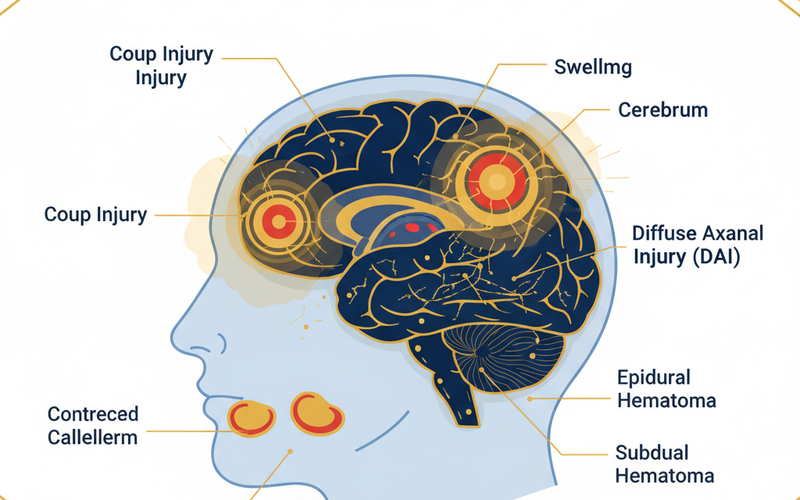
A traumatic brain injury is damage to the brain caused by a blow, jolt, penetration, or sudden acceleration-deceleration. The impact is not always obvious at first. Some brain injury victims feel fine for hours or days, then experience symptoms that worsen rapidly. Others are hospitalized immediately with visible neurological damage. What unites all brain injury cases is this: the injury is invisible on the surface, but its effects on your life are anything but.
Types of Brain Injuries Atlanta Attorneys Handle
A brain injury attorney in Georgia deals with several injury categories, each with different recovery trajectories and compensation profiles:
Concussion and mild TBI. Loss of consciousness for seconds to minutes, memory gaps, confusion, headache, nausea. Most people recover in weeks to months. But some develop post-concussion syndrome — ongoing symptoms lasting months or years that prevent return to work or normal activity.
Moderate TBI. Loss of consciousness lasting minutes to hours, significant memory loss, difficulty with focus and decision-making, mood changes, balance problems. Recovery takes months. Return to prior job function may require retraining or job modification.
Severe TBI. Loss of consciousness lasting hours or longer, profound disability, physical paralysis or weakness, severe cognitive impairment, personality changes. Lifelong care and support are the baseline. These cases generate the highest damages — often $500,000 to $2,000,000+.
Common Causes of Brain Injuries in Georgia
Any force strong enough to move the brain inside the skull can cause injury. In Atlanta and Georgia, the most common sources are:
- Car accidents — the leading cause of brain injuries in working-age adults. High-speed collisions, T-bone impacts, and rollover crashes generate the trauma that causes TBI.
- Slip and fall accidents — head contact with hard surfaces, especially in seniors, generates significant brain injury risk. Falls from height multiply that risk dramatically.
- Motorcycle and bicycle crashes — riders lack the protective frame of a car. Even modest-speed impacts to the head cause serious brain injury.
- Assaults and violence — intentional blows to the head cause traumatic brain injuries that carry both criminal and civil liability.
- Medical negligence — anesthesia errors, surgical complications, delayed stroke treatment, and birth injury negligence all cause preventable brain injuries.
- Workplace accidents — construction falls, forklift collisions, and equipment strikes cause occupational brain injuries that trigger both workers compensation and third-party claims.
Practical rule: If you hit your head in an accident caused by another person or entity, seek medical evaluation immediately — even if you feel fine. The absence of symptoms in the first 24 hours does not rule out brain injury. Delayed neurological symptoms are common and dangerous.
Brain Injury Symptoms and Why They Matter to Your Attorney
A brain injury attorney must understand the full range of symptoms because each category drives different damages categories. Your attorney documents every symptom and its impact on your life — not just your physician’s notes, but your lived experience.
Physical Symptoms of Brain Injury
Headaches, dizziness, balance problems, weakness, numbness, vision changes, hearing loss, sensitivity to light and sound — these are the most commonly reported symptoms immediately after brain injury. They may resolve in weeks or become chronic. Your attorney tracks when each appeared, how long it lasted, and what medical treatment was necessary to manage it. Physical symptoms are the easiest to document but sometimes the least important to long-term recovery. A severe headache resolves in three months. A cognitive change may last a lifetime. Both are compensable — but the cognitive change drives higher damages.
Cognitive and Memory Symptoms
Difficulty concentrating, memory loss, confusion, slow processing speed, difficulty following conversations — these cognitive changes are the signature symptoms of moderate to severe traumatic brain injury. They prevent return to work, require job accommodation, and frequently require ongoing cognitive rehabilitation. These symptoms are harder to document than a fracture — but your attorney builds the case through neuropsychological testing, your own journal entries, and family witness testimony about changes in your thinking and behavior. A person who once held a complex job but now cannot focus for 30 minutes has suffered a profound disability — and the law recognizes that disability in damages.
Emotional and Behavioral Changes
Personality changes, irritability, anxiety, depression, impulsivity, aggression — these emotional effects of brain injury devastate relationships and employment. A person who was calm and patient becomes angry and withdrawn. A person who was organized becomes chaotic. These changes are real, measurable, and compensable — but only if documented through psychiatric evaluation and family statements. Your spouse’s testimony that you have become someone they no longer recognize is powerful evidence of brain injury impact — and it drives damages.
Practical rule: Keep a symptom journal from the day of your injury forward. Note the date, time, symptom, severity (1-10 scale), what triggered it, what relieved it, and how it affected your day. Your brain injury attorney uses this journal to build damages at trial if necessary.

Georgia Personal Injury Law and Brain Injury Liability
Your right to sue and the compensation you can pursue is controlled by Georgia tort law. A brain injury attorney applies these rules to your specific facts to build a case for maximum recovery.
Negligence Standard for Brain Injuries
Under Georgia negligence law, you must prove four elements:
1. Duty of care. The defendant owed you a legal duty to act safely. A driver owes all other drivers a duty to follow traffic laws. A property owner owes visitors a duty to maintain the premises in a reasonably safe condition. A doctor owes a patient a duty to provide care that meets the standard of care in their field.
2. Breach of that duty. The defendant failed to act safely or competently. A driver texting and swerving breaches their duty. A property owner ignoring a floor hazard breaches theirs. A surgeon operating while impaired breaches the medical standard.
3. Causation — both actual and proximate. The defendant’s breach caused your brain injury. You would not have been injured but for their negligence. And the injury was a foreseeable result of their breach — not a freak accident.
4. Damages — quantifiable harm. Your brain injury caused measurable harm: medical expenses, lost wages, pain and suffering, loss of enjoyment of life, and ongoing care costs. You must prove these damages with documentation, not guesswork.
Comparative Negligence in Georgia
Georgia follows a modified comparative negligence rule. You can still recover even if you were partially at fault — as long as you are less than 50% responsible for the accident. But your damages are reduced by your percentage of fault. If you were 20% at fault for a car accident that caused your brain injury, your $500,000 recovery becomes $400,000. A brain injury attorney contests every percentage point the defendant assigns to you. The difference between 20% and 30% assigned fault is $50,000 on a $500,000 case — your attorney’s negotiating skill directly affects your bottom-line recovery.
Practical rule: Never make a recorded statement to an insurance adjuster without your attorney present. Every word can be used against you to increase your assigned fault percentage. Your attorney handles all communications with the other side from the moment you retain representation.
What Brain Injury Compensation Looks Like in Georgia Cases
Compensation for brain injuries is categorized into economic and non-economic damages. A thorough brain injury attorney pursues both aggressively.
Economic Damages — Quantifiable Costs
Medical expenses. Every cost related to your brain injury recovery: emergency room, hospitalization, imaging (CT scans, MRIs), neurology and neuropsychology specialist appointments, rehabilitation therapy, pain management, psychiatric treatment, ongoing medications. In serious cases, a life care plan — developed by a specialist — projects medical costs over your lifetime and is presented as part of your claim. A person injured at age 35 with a 50-year life expectancy can have lifetime medical costs exceeding $2,000,000 for serious TBI.
Lost wages and earning capacity. If your brain injury prevents you from working, you recover the wages you lost during recovery. If your injury permanently reduces your earning capacity — you can no longer do your prior job, or can only work part-time — you recover the lifetime difference in earnings. A vocational rehabilitation expert calculates this in serious cases. A 40-year-old earning $100,000 who can now only work part-time at $30,000 has lost $1,400,000 in earning capacity over 25 remaining working years.
Out-of-pocket expenses. Home modification costs to adapt to disability, transportation to medical appointments, in-home care costs, medical equipment purchases — all recoverable when documented. These small expenses add up quickly in serious TBI cases.
Non-Economic Damages — Pain, Suffering, and Life Impact
Pain and suffering. The physical pain and emotional distress of your brain injury. This has no invoice attached — it is calculated using the multiplier method (medical expenses × a number between 1 and 5, depending on injury severity) or the per diem method (a daily dollar amount for each day of suffering). The more thorough your symptom journal and physician documentation, the stronger your pain and suffering claim.
Loss of enjoyment of life. If your brain injury prevents you from activities that gave your life meaning — sports, hobbies, family outings, work you loved — those losses are compensable. A 40-year-old who can no longer run has lost decades of an activity they valued. That loss is real money in the eyes of Georgia juries.
Disfigurement and scarring. While brain injuries are internal, some are accompanied by visible head trauma — scars, skull fractures, facial injuries. These are compensated in addition to the underlying brain injury.

Why Brain Injury Cases Require Specialized Attorneys
Brain injury cases are not routine personal injury cases. They require attorneys who understand neurology, neuropsychology, rehabilitation medicine, and the long-term prognosis of different injury patterns. Generalist personal injury attorneys often undervalue brain injury claims because they do not understand the complexity of TBI recovery.
Medical Complexity and Expert Testimony
A brain injury attorney works with medical experts — neurologists, neuropsychologists, rehabilitation specialists — who explain your injury to a jury in plain language. They testify about what your brain scans show, what your cognitive testing reveals, what your prognosis is, and what your care needs will be. These expert opinions drive the jury’s understanding of damages far more than your own testimony alone. A jury hears from an expert that you have a permanent 30% reduction in cognitive processing speed and understands what that means for your life.
Documenting Invisible Injuries
Brain injuries are invisible. There is no cast, no bandage, no visible sign of harm. Insurance companies and defense attorneys exploit this invisibility, arguing that your symptoms are exaggerated or psychological rather than real neurological damage. A specialized brain injury attorney builds your case with objective testing — neuroimaging, neuropsychological evaluation, balance testing — that proves your injury is real. The data from validated testing instruments carries weight that personal testimony alone cannot match.
Predicting Long-Term Impact
A person’s trajectory after brain injury depends on injury severity, pre-injury health and cognitive status, quality of rehabilitation, family support, and effort in recovery. Predicting 20 or 40 years of impact requires understanding neuroscience and recovery patterns. Your brain injury attorney develops this prediction through expert testimony and research literature, then translates it into dollar damages. A person who will struggle with memory and attention for the rest of their life requires permanent compensation — your attorney’s expert quantifies that.
Practical rule: If you have a brain injury claim, interview multiple attorneys and specifically ask whether they regularly handle TBI cases. Their experience with brain injury cases directly affects your case value. A general personal injury attorney may settle your case for a fraction of what it is worth.
Brain Injury Recovery: What to Expect and How Long It Takes
Understanding recovery timelines helps you and your brain injury attorney evaluate damages realistically. Recovery from traumatic brain injury is not linear — some symptoms resolve quickly, others persist or worsen over months.
Recovery Timeline by Severity
Mild TBI (concussion) recovery. Most people recover within 2 to 4 weeks. Physical symptoms — headache, dizziness — often resolve first. Cognitive symptoms — memory problems, concentration difficulty — may persist longer. If symptoms persist beyond 3 months, post-concussion syndrome is diagnosed and requires extended treatment. The CDC provides comprehensive TBI recovery guidelines that your attorney uses as a standard for expected outcomes.
Moderate TBI recovery. Initial recovery takes 2 to 3 months, with gradual improvement continuing for 6 to 12 months. Many people achieve functional recovery but experience persistent cognitive or emotional changes. Return-to-work timelines are often 3 to 6 months, sometimes longer with job modification. Ongoing therapy is frequently necessary to prevent decline.
Severe TBI recovery. Initial hospitalization and acute care lasts weeks. Inpatient rehabilitation lasts weeks to months. Return home involves intensive outpatient therapy. Most improvement occurs in the first 12 to 18 months, but ongoing gains may continue for years. Many severely injured patients require permanent care assistance. Recovery is not about returning to baseline — it is about achieving maximum functional independence possible.
Rehabilitation and Neuroplasticity
Brain rehabilitation works because the brain is plastic — it can rewire itself and form new neural pathways to compensate for damaged areas. Intensive cognitive therapy, physical therapy, occupational therapy, and speech therapy drive this neuroplasticity. The intensity and duration of rehabilitation directly affects outcomes. A person who participates aggressively in rehabilitation often achieves better functional recovery than someone who does minimal therapy — even with the same initial injury severity. This is where your brain injury attorney‘s damages claim becomes crucial: recovery is expensive. Six months of outpatient cognitive rehabilitation can cost 15,000 to 30,000 dollars. A year of intensive therapy costs significantly more.
Practical rule: Participate fully in recommended rehabilitation therapy — even when you do not feel like it and progress seems slow. Your effort in therapy affects your actual recovery and your case damages simultaneously.
Steps to Take Immediately After a Brain Injury in Atlanta
What you do in the first days after your injury directly affects what your case will be worth. The decisions you make in the immediate aftermath are critical.
Seek Emergency Medical Evaluation
If you lost consciousness, have a persistent headache, are confused, or have any of the symptoms listed above — go to an emergency room immediately. Ask for a CT scan. If the CT is normal but symptoms persist, request an MRI. Document every result. This immediate medical response establishes that you were injured, ties your symptoms to a specific incident, and creates a medical record that is hard to challenge later. Never assume you are fine just because initial imaging is normal.
Report the Incident to Relevant Parties
If the brain injury was from a car accident, report it to police and get a report number. If it was at a workplace, report it to your employer and OSHA if required. If it was from a fall on someone’s property, report it to the property owner. These reports create official records that support your claim and trigger insurance coverage.
Preserve Evidence
If there were witnesses to the accident, get their names and contact information. If there was surveillance footage, notify your attorney immediately so they can send a preservation letter before the footage is deleted. Medical imaging is crucial — obtain copies of all CT scans, MRIs, and any neurological testing. Keep every medical record from the day forward.
Contact a Brain Injury Attorney in Atlanta
HB Injury Lawyers handles traumatic brain injury cases throughout Georgia. The firm works with leading neurologists and neuropsychologists, understands the complexity of brain injury recovery, and has recovered millions for clients with serious neurological damage. Call (404) 446-9854 or visit the contact page for a free consultation — available today.
Brain Injury Settlement Amounts in Georgia and Nationwide
What is a brain injury claim worth? The answer depends on injury severity, liability clarity, and how aggressively your attorney pursues damages. The NHTSA documents that severe head injuries from traffic crashes are among the costliest injury categories nationally.
Mild TBI (concussion) settlements range from 10,000 to 75,000 dollars for straightforward cases with clear liability. Moderate TBI cases typically settle between 75,000 and 400,000 dollars depending on permanent effects. Severe TBI cases frequently exceed 500,000 dollars, with many exceeding 1,000,000 dollars when liability is clear and the injured person’s lifetime care needs are substantial. The American Association of Neurological Surgeons emphasizes that severe TBI care is among the costliest long-term medical needs — justifying settlements that account for lifelong care and support.
Practical rule: Do not accept an early settlement offer for a brain injury case without having your attorney fully evaluate your medical condition and long-term prognosis. Early settlement offers are almost always below what a case is actually worth — especially in serious TBI cases where future costs are substantial.
FAQ — Brain Injury Claims in Georgia
| Question | Answer |
|---|---|
| How long after a brain injury can I file a lawsuit in Georgia? | Georgia’s statute of limitations is two years from the date of injury. After two years, your claim is permanently barred — you cannot sue, no matter how strong the liability. Contact an attorney immediately. |
| Can I recover if I was partially at fault for the accident that caused my brain injury? | Yes — under Georgia’s modified comparative negligence rule, you can still recover even if you are up to 49% at fault. Your recovery is reduced by your fault percentage. |
| What if the person who caused my brain injury does not have insurance? | You can still sue them personally, but their ability to pay is limited. You may also have an uninsured motorist claim if the injury was from a car accident, or you may pursue a premises liability claim if it was a fall on someone’s property. |
| How much does it cost to hire a brain injury attorney? | HB Injury Lawyers works on contingency — you pay nothing unless we recover. Our fee is a percentage of your settlement or verdict, typically 25-33%. You owe legal costs only if we recover money. |
| Will my brain injury case go to trial? | Most cases settle before trial, but some do go to jury trial. Your attorney prepares every case as if it will be tried — this preparation often leads to better settlements because the defendant knows you are ready to go to court. |
| How do I know if I have a valid brain injury claim? | You likely have a valid claim if: (1) another person or entity caused an accident, (2) you suffered a documented brain injury, and (3) you acted reasonably at the time (not primarily at fault). A free consultation determines whether a claim exists. |
| What is the longest recovery time for severe brain injury? | Severe TBI recovery can continue for years — though most improvement occurs in the first 18 months. Some people continue to see cognitive and emotional improvements years after injury with proper therapy. |
| Can I work while recovering from a brain injury? | Some people return to work with accommodations — reduced hours, modified duties, or assistive technology. Others cannot work during recovery. Your physician and attorney work together to determine what is realistic given your specific injury and job demands. |
Brain Injury Recovery and Justice Start With the Right Attorney
A brain injury attorney in Atlanta fights so you can focus on recovery. HB Injury Lawyers has recovered millions for clients with serious brain injuries — from car accidents, falls, medical negligence, and workplace incidents. Call (404) 446-9854 today to speak with an attorney about your case — contact us by phone or online form for a free, confidential consultation.
About HB Injury Lawyers
HB Injury Lawyers is an Atlanta-based personal injury firm representing clients in traumatic brain injury cases, car accidents, slip and fall claims, and serious injury matters throughout Georgia. The firm is known for thorough case investigation, aggressive negotiation, and courtroom litigation when necessary to achieve maximum recovery for every client.
