An Atlanta brain injury lawyer helps you rebuild your life after a traumatic brain injury — but only if you reach out fast. Traumatic brain injury (TBI) causes severe, life-altering consequences: cognitive changes, permanent memory loss, personality shifts, chronic pain, and the end of careers and relationships. Recognizing TBI early and securing experienced legal representation determines whether you recover maximum compensation or navigate the aftermath alone. This guide covers what TBI is, how it happens, the signs you need immediate medical and legal help, and why an Atlanta brain injury attorney matters even more than you probably think.
What Is Traumatic Brain Injury and Why Atlanta Brain Injury Lawyers Exist
Traumatic brain injury is a sudden, violent impact to your head that disrupts brain function. The impact does not always cause a visible head wound. A violent shaking, a direct blow, a penetrating injury, or rapid acceleration-deceleration forces can all trigger TBI. Your brain shifts inside your skull, tearing nerve fibers, damaging blood vessels, and triggering inflammatory cascades that can persist for years.
TBI Is Not Just a Concussion
Concussions are mild traumatic brain injuries. Most people recover within weeks or months. But moderate and severe TBI cause permanent brain damage. Your neurons do not fully repair. Your cognitive capacity may never return to baseline. The CDC defines TBI as a disruption in brain function caused by a blow to the head or penetrating head injury. That clinical definition masks the human reality: some people never work again. Some cannot remember their children’s names. Some experience personality changes so profound their families no longer recognize them.
How Common Is TBI in Atlanta?
The CDC reports over 64,000 deaths annually from TBI-related injuries in the United States. More than 2.8 million TBI-related emergency department visits, hospitalizations, and deaths occur yearly. Georgia, with its heavy vehicle traffic, construction industry, and sports culture, accounts for a significant portion of that number. Car crashes, truck accidents, motorcycle falls, workplace injuries, and assault-related head trauma are the leading causes of TBI in urban Atlanta.
Practical rule: If you lost consciousness — even for a moment — or cannot remember the injury event itself, you have a medical and legal obligation to seek immediate medical evaluation and document everything. Delayed diagnosis of TBI weakens both your medical recovery and your legal claim.
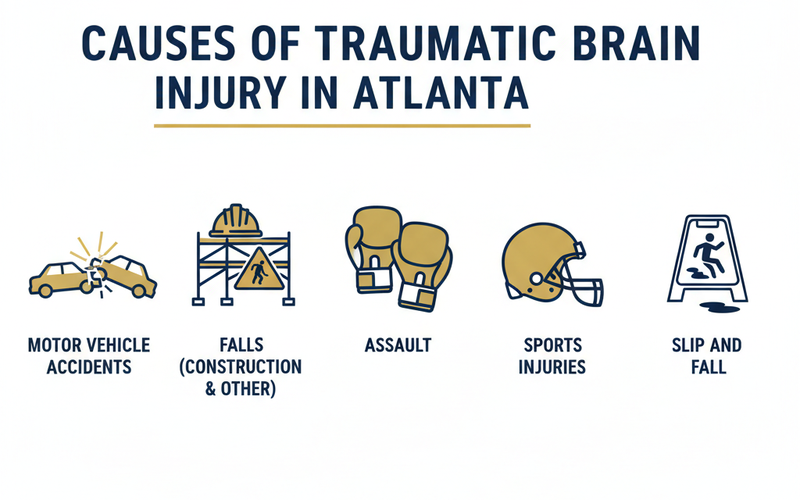
Causes of Traumatic Brain Injury in Atlanta
Understanding what causes TBI in your city helps you recognize liability and evaluate whether legal action applies to your situation.
Motor Vehicle Accidents — The #1 Cause
Car crashes, truck collisions, motorcycle accidents, and rideshare incidents cause more TBIs in Atlanta than any other mechanism. A high-speed front-end collision can slam your brain against the interior of your skull even if you wear a seatbelt. Airbag deployment can cause TBI. Rear-impact crashes can cause whiplash injuries that trigger diffuse axonal injury (DAI) — the most severe form of TBI. The National Highway Traffic Safety Administration (NHTSA) documents the relationship between vehicle crashes and traumatic brain injury. If a negligent driver caused your crash, you have a personal injury claim. An Atlanta car accident lawyer can evaluate both your injury claim and potential catastrophic damage exposure.
Workplace Injuries and Construction Falls
Atlanta’s booming construction industry creates constant TBI risk. Falls from scaffolding, roofs, ladders, and elevated surfaces cause severe head trauma. Struck-by injuries (being hit by falling objects, equipment, or vehicles on site) cause TBI. Electrocution incidents can cause loss of consciousness and secondary head trauma. If your employer failed to provide fall protection, proper training, or safe equipment, workers’ compensation covers your medical care — but a third-party lawsuit against a negligent contractor or equipment manufacturer may recover additional damages.
Assaults and Violence
Beatings, domestic violence, and assault-related head trauma cause TBI. Victims frequently minimize the injury or delay medical evaluation due to fear, shame, or isolation. By the time neurological symptoms emerge, critical evidence (security footage, witness statements, immediate medical records documenting injury mechanism) may be lost or degraded. HB Injury Lawyers works with victims of violence to recover damages from the responsible parties and secure long-term support.
Slip, Fall, and Premises Liability Incidents
Slips and falls on someone else’s property can cause severe head trauma if you strike your head on a hard surface, fall down stairs, or hit furniture or fixtures. Elderly individuals are at highest risk, but young people sustaining high-speed falls can suffer significant TBI. Slip and fall attorneys in Atlanta help premises liability victims hold property owners accountable.
Sports and Recreation Injuries
Football, soccer, baseball, skateboarding, and cycling cause TBI — particularly in young athletes who may not report symptoms to coaches or parents. Repeated concussions increase the risk of chronic traumatic encephalopathy (CTE), a degenerative brain disease. If an athletic facility, coaching staff, or school failed to implement proper concussion protocols, they may be liable for your child’s resulting injuries.
Practical rule: Document the cause and mechanism of your injury immediately. Photographs of the scene, written descriptions of how the injury occurred, names of witnesses, and the identity of any responsible party are critical to building a TBI claim. Your attorney will request video footage, medical records, police reports, and expert analysis — but only if you preserve the initial evidence.
Signs and Symptoms of Traumatic Brain Injury — When to See an Atlanta Brain Injury Attorney
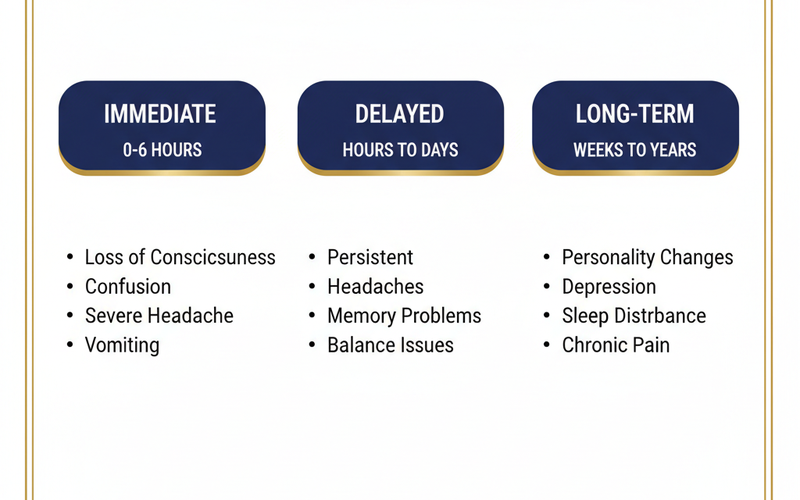
Recognizing TBI symptoms early determines your medical recovery timeline and your legal claim timeline. Many TBI symptoms emerge hours or days after the initial injury — not immediately.
Immediate Symptoms (First Hours After Injury)
Loss of consciousness: Even a few seconds of unconsciousness indicates moderate-to-severe TBI. You need immediate emergency evaluation. Any patient transported by ambulance with head trauma should be evaluated at a trauma center, not released home without imaging.
Confusion or disorientation: Difficulty understanding questions, not knowing your location or the current date, or not remembering the injury event itself — these are hallmark TBI signs. Documented confusion at the scene strengthens your injury claim significantly.
Severe headache: A sudden, intense headache following a head injury may indicate intracranial pressure changes, bleeding, or brain swelling. This is a medical emergency.
Nausea and vomiting: Projectile vomiting after head injury signals increased intracranial pressure and requires immediate CT or MRI imaging.
Clear fluid from nose or ears: Cerebrospinal fluid leakage indicates a skull fracture and severe brain injury. This requires emergency surgery.
Delayed Symptoms (Hours to Days After Injury)
Persistent headaches: Headaches that do not improve with rest or pain medication and worsen over 24-48 hours suggest ongoing brain inflammation or blood clots.
Memory problems: Difficulty remembering the injury event, trouble forming new memories, or gaps in what happened during the accident are common TBI symptoms. Documented memory loss on medical records strengthens your cognitive damage claim.
Difficulty concentrating: Inability to focus on conversations, difficulty reading or following instructions, and poor attention span indicate frontal lobe involvement. These symptoms affect your ability to work and constitute permanent disability in many cases.
Balance problems and dizziness: Vertigo, dizziness, or balance loss indicates brainstem or cerebellar involvement. These symptoms can persist for months or years.
Sensitivity to light and sound: Photophobia (light sensitivity) and phonophobia (sound sensitivity) are common TBI sequelae. They limit your ability to work in normal office environments and necessitate workplace accommodations.
Long-Term Symptoms (Weeks to Years After Injury)
Personality changes: A person who was easygoing becomes irritable or aggressive. A cautious person becomes reckless. A skilled worker becomes unable to perform routine tasks. These changes are neurological, not behavioral — and they are permanent in many cases.
Depression and anxiety: TBI frequently triggers mood disorders that did not exist before the injury. Documented psychiatric treatment, specialist evaluation, and medications all strengthen your non-economic damage claim.
Sleep disturbances: Insomnia, hypersomnia (sleeping excessively), or abnormal sleep patterns are TBI sequelae that disrupt work and family function.
Chronic pain: Headaches, neck pain, and generalized pain syndromes persist long after the initial injury resolves. These require ongoing pain management and specialist care.
Practical rule: Keep a symptom journal starting immediately after your injury. Record headaches, mood changes, sleep quality, memory issues, and any difficulty with work or family tasks. This journal becomes evidence of your injury impact and is invaluable when negotiating your settlement.
Diagnosis and Medical Evaluation of TBI in Georgia
Proper diagnosis requires specialist evaluation. Many emergency departments underestimate TBI severity or discharge patients prematurely. Your attorney and your neurologist must work together to build an accurate injury record.
Imaging Studies — CT and MRI
A CT scan taken immediately after head trauma detects skull fractures, bleeding, and brain swelling. Not all TBI shows on immediate CT — diffuse axonal injury (DAI), the most severe form, may not be visible on initial imaging. An MRI taken days or weeks later using advanced sequences (like diffusion tensor imaging) can reveal axonal damage that CT missed. If your initial CT was “negative” but your symptoms are severe, demand an MRI before accepting anyone’s conclusion that you are “fine.”
Neuropsychological Testing
A comprehensive neuropsych evaluation measures memory, attention, processing speed, executive function, and mood. This testing creates an objective, documented baseline of your cognitive abilities post-injury. The results directly support your damage claim. The American Academy of Clinical Neuropsychology sets standards for this testing — demand it from a board-certified neuropsychologist, not a general psychologist.
Specialist Consultation — Neurology and Neuropsychiatry
A board-certified neurologist should evaluate any moderate-to-severe TBI. A neuropsychiatrist can address mood and behavioral changes. Ongoing specialist care is not optional — it is the foundation of your medical claim. Contact HB Injury Lawyers if your insurance company denies specialist referrals or limits your care.
What Damages You Can Recover in an Atlanta Traumatic Brain Injury Claim
Georgia law allows full recovery for all TBI-related damages. The stronger your medical documentation, the larger your settlement or verdict.
Medical Expenses — Past, Present, and Future
Emergency care, imaging, ICU hospitalization, surgery, rehabilitation, ongoing specialist appointments, neuropsychological testing, medications, and assistive technology — all recoverable. Future medical expenses require a physician’s opinion on your long-term care needs and a life care planner’s cost projection.
Lost Wages and Loss of Earning Capacity
If your TBI prevents you from returning to work, you recover lost wages during your disability period. If you return to work but at reduced capacity or reduced pay, you recover the difference. If your TBI is permanent and you can never work again, you recover your full earning capacity over your remaining working life — a number that can reach hundreds of thousands of dollars in cases involving young workers or high-income professionals.
Pain and Suffering, Loss of Enjoyment of Life, and Emotional Distress
Georgia law recognizes that permanent brain injury causes suffering beyond economic loss. These damages are calculated using the multiplier method (a multiple of economic damages) or the per diem method (a daily rate). Stronger medical documentation and family testimony increase these awards significantly.
Cost of Home Care and Modifications
If your TBI requires ongoing home care (nursing, physical therapy, speech therapy), household modifications (ramps, safety equipment, bathroom modifications), or assistive technology (communication devices, mobility aids), all costs are recoverable.
Practical rule: Document every medical appointment, every therapy session, every medication, and every adaptive device. The difference between a $100,000 settlement and a $500,000 settlement is often the completeness of your medical and expense documentation.

Steps to Take Immediately After a Traumatic Brain Injury in Atlanta
Step 1: Seek Emergency Medical Evaluation (Same Day)
Go to an emergency room the same day as your injury. Do not wait. Tell the physician exactly what happened, describe every symptom, and request imaging (CT at minimum, MRI if symptoms are significant). Insist on documentation. Your medical records create the foundation of your injury claim.
Step 2: Report the Injury to the Responsible Party or Their Insurance
If a car crash caused your injury, report it to the other driver’s insurance and the police. If a workplace injury, report it to your employer and OSHA. If assault, report to police. Create an official record of the incident.
Step 3: Document the Scene and Preserve Evidence
Photograph or video-record the accident scene, your vehicle or property damage, any visible injuries, hazardous conditions, and the surrounding area. Write down names and contact information of any witnesses. Request copies of security footage if available. These materials degrade quickly — preserve them immediately.
Step 4: Contact an Atlanta Brain Injury Attorney Before Talking to Insurance Companies
Insurance adjusters will contact you quickly, sometimes with sympathy and understanding, sometimes with skepticism designed to minimize your claim. Do not give recorded statements. Do not accept settlement offers. HB Injury Lawyers sends preservation letters to all responsible parties and insurers, protecting your evidence and your legal rights. This overview on workplace accommodations for brain injury explains practical recovery steps you should take immediately after diagnosis.
Step 5: Follow All Medical Recommendations
Attend every appointment, complete every recommended test, take all prescribed medications, and follow rehabilitation protocols — even when you do not see immediate improvement. Gaps in your medical care weaken your claim significantly. Defense attorneys will argue that you recovered more fully than you claim if your records show missed appointments or early discharge.
Practical rule: If a doctor recommends something and you cannot afford it or your insurance denies it, tell your attorney immediately. We can often negotiate coverage, find alternative funding, or build a claim against the insurance company for failing to authorize medically necessary care.
How an Atlanta Brain Injury Attorney Protects Your Rights and Maximizes Your Recovery
TBI cases are complex. Insurance companies know this and use that complexity against unrepresented claimants. Here is what an experienced attorney does for your case.
Preserve Critical Evidence Before It Disappears
Surveillance footage from traffic cameras, business locations, and ATMs degrades or is overwritten within 30-90 days. Medical records are sometimes lost during hospital transitions. Witness memories fade. Your attorney sends immediate preservation letters to all entities that may hold evidence relevant to your case.
Retain Expert Witnesses to Validate Your Injury
Your treating physicians document your injury. But defense experts will argue it is not as severe as you claim. Your attorney retains independent neurologists, neuropsychologists, and life care planners who review your records and provide opinions that support your damage claim. These experts are critical in serious TBI cases.
Investigate the Responsible Party’s Liability
If your injury was caused by a negligent driver, a reckless employer, a property owner’s failure to maintain safety, or an assailant, your attorney investigates whether additional parties share liability — increasing the total available recovery.
Negotiate Aggressively or Take Your Case to Trial
Insurance companies know which attorneys will try their cases in front of juries and which will not. An attorney with a trial track record negotiates stronger settlements. If a fair offer is not forthcoming, your attorney is prepared to present your case to a jury.
The Georgia Workers’ Compensation System for Work-Related TBI
If your traumatic brain injury occurred during work, workers’ compensation provides medical benefits and wage replacement. But the workers’ comp system is designed to limit your recovery compared to a personal injury lawsuit.
Workers’ Compensation Covers Medical Care but Limits Damages
Georgia’s workers’ compensation system requires your employer’s insurance to pay for all medical treatment related to your TBI — no co-pays, no deductibles, 100% coverage. They cover emergency care, hospitalization, rehabilitation, specialist appointments, and assistive devices. But they do not cover pain and suffering or loss of enjoyment of life. They limit wage replacement to a percentage of your pre-injury average wage. And they typically prevent you from suing your employer directly.
Third-Party Liability Claims May Unlock Additional Recovery
If your work-related TBI was caused by a third party — a negligent contractor, a defective piece of equipment, a vehicle driver who hit you, or a property owner — you have a third-party liability claim separate from workers’ compensation. This claim can recover pain and suffering, punitive damages, and full economic losses. A workers’ compensation attorney and a personal injury attorney sometimes work together on these hybrid cases to maximize recovery.
Permanent Partial Disability and Vocational Rehabilitation
If your TBI leaves you unable to return to your prior job, workers’ compensation provides vocational rehabilitation services to help you transition to a different career. You also receive permanent partial disability (PPD) benefits calculated based on your assigned impairment rating. Neurologists and neuropsychologists evaluate your cognitive deficits and assign an impairment rating that determines your PPD benefit amount.
Practical rule: If you are injured at work, report it immediately to your employer and seek workers’ compensation. But within days, consult a personal injury attorney to evaluate whether a third-party claim exists. Missing the window to preserve third-party evidence costs you hundreds of thousands of dollars.
Chronic Traumatic Encephalopathy (CTE) and Repeated Head Injuries
One TBI is life-altering. Multiple TBIs can cause a progressive neurological disease called chronic traumatic encephalopathy (CTE).
What Is CTE?
CTE is a degenerative brain disease caused by repeated head injuries over time. Football players, boxers, military personnel exposed to blast injuries, and people who experience multiple assaults develop accumulating brain damage. Years after the initial injuries, they develop progressive cognitive decline, mood disorders, behavioral changes, and eventually dementia. Boston University’s chronic traumatic encephalopathy research program has documented CTE in hundreds of individuals and identified the pathological markers that distinguish it from Alzheimer’s disease or other dementias.
Liability for Repeated TBI Exposure
Schools, athletic organizations, the military, and employers have a duty to protect people from repeated head injury exposure. A school that does not enforce proper concussion protocols. A boxing organization that does not monitor cumulative injury exposure. An employer that does not provide military service members with adequate blast protection. All can be liable for CTE development in their athletes, soldiers, or workers. These cases are complex and require expert testimony from CTE researchers and neurologists, but the damage awards can be substantial when injury causation is established.
Traumatic Brain Injury FAQs — Atlanta Brain Injury Lawyer
| Question | Answer |
|---|---|
| How long does a TBI case take to settle? | Straightforward cases: 6-12 months. Cases requiring expert testimony and medical evaluation: 1-3 years. Trials: 2-4 years. |
| What if I did not lose consciousness? | Loss of consciousness is one indicator of TBI severity, but it is not required for TBI diagnosis. Documented confusion, memory loss, or neurological symptoms are equally valid. |
| Can I recover damages if TBI was partially my fault? | Yes — Georgia’s modified comparative negligence rule allows recovery as long as you are less than 50% at fault. Your damages are reduced by your assigned fault percentage. |
| What if my symptoms started weeks after the injury? | Delayed symptom onset is common in TBI. Document everything with medical records. Defense arguments that you “seemed fine” are countered by physician opinions that TBI symptoms frequently emerge over time. |
| What is the statute of limitations for a TBI claim in Georgia? | Two years from the date of injury to file a lawsuit. Do not wait until the deadline approaches — preservation of evidence, expert consultation, and case development require time. |
| Will my case go to trial? | Most TBI cases settle before trial, but your attorney must be prepared to try your case if a fair settlement offer is not forthcoming. Insurance companies offer more when they know you will fight in court. |
Your Atlanta Brain Injury Lawyer Is Ready to Fight for Your Recovery
Traumatic brain injury changes your life in ways that are difficult for people who have never experienced it to understand. An Atlanta brain injury lawyer who has handled dozens of serious TBI cases understands what you face. Contact HB Injury Lawyers for a free consultation today. Call (404) 446-9854 or visit the contact page to start your case. Your recovery depends on the choices you make in the next few days. The attorneys at HB Injury Lawyers are available to discuss your case: call (404) 446-9854 today.
About HB Injury Lawyers
HB Injury Lawyers is an Atlanta-based personal injury firm representing clients with traumatic brain injuries, spinal cord injuries, catastrophic injuries, and wrongful death claims. The firm is led by Desmond Humphrey and David Ballard, experienced trial attorneys who fight for maximum compensation in serious injury cases throughout Georgia.
