When a massive 18-wheeler collides with your vehicle on a Georgia highway, the aftermath is devastating. These commercial trucks weigh up to 80,000 pounds—30 times heavier than a standard car. The impact forces are catastrophic. An 18-wheeler accident lawyer isn’t just helpful in these cases; they’re essential. You’re facing injuries that may never fully heal, medical bills that threaten your family’s financial stability, and insurance companies with armies of adjusters fighting your claim. Your life has been upended in seconds by a decision made by someone in a cab above your windshield.
What makes truck accident cases different? The laws. The regulations. The defendants. When you’re hit by a standard vehicle, you’re dealing with one driver and one insurance company. When an 18-wheeler accident lawyer takes your case, they’re investigating commercial drivers, trucking companies, maintenance contractors, cargo loaders, and manufacturers. Each party bears different legal responsibility. Georgia law allows you to recover damages from every negligent party—but only if your attorney knows where to look. Without legal representation, you’ll never know how many defendants you should have sued or how much you left on the table.
We’ve recovered over $150 million for injured Georgians. This guide walks you through what happens after a truck crash, why liability in these cases is complex, and how an experienced 18-wheeler accident lawyer protects your right to full compensation. You deserve answers. You deserve justice. You deserve every dollar the law entitles you to recover.
The Physics of 18-Wheeler Collisions: Why These Accidents Are Different
A standard sedan weighs 3,000 to 4,000 pounds. An 18-wheeler tractor-trailer weighs 80,000 pounds when fully loaded. This isn’t just a size difference—it’s a physics problem that 18-wheeler accident lawyers understand at a fundamental level. Understanding these physics is critical because it explains why your injuries are more severe than a standard car accident victim’s injuries, and why insurance companies must pay more.
Impact Force and Injury Severity
When a truck traveling at highway speed strikes your vehicle, the energy transfer is incomprehensible. A 40 mph collision between two sedans might result in bumps and bruises. A truck traveling at the same speed can crush your vehicle’s frame. Spinal injuries, traumatic brain injuries, and crushed limbs are standard outcomes. Your body experiences forces that human tissue isn’t designed to survive. The National Highway Traffic Safety Administration (NHTSA) reports that large truck crashes account for 14% of all traffic deaths but involve vehicles representing less than 5% of registered vehicles. This disparity is pure physics. This is why 18-wheeler accident lawyer cases demand detailed medical documentation from day one. Every injury must be photographed, every scan preserved, every specialist’s report filed carefully. Medical evidence becomes the foundation of your entire case.
Practical rule: 47% of victims injured in truck accidents report chronic pain lasting more than one year. The average spinal surgery costs $150,000 to $300,000 in Georgia. Budget accordingly for your long-term recovery.
Stopping Distance and Driver Reaction Time
An empty 18-wheeler requires 300 feet to stop from highway speed (55 mph). A loaded truck may need more—up to 400 feet in some conditions. Standard cars need roughly 150 feet. This delay means a truck driver can’t react quickly to hazards. If a car stops suddenly, the truck behind it has already committed to a path it cannot alter. This is not a limitation of driver skill—it’s a limitation of physics. The brakes can only slow an 80,000-pound mass so quickly. Federal regulations acknowledge this by mandating specific following distances. If a truck driver is following too closely, they may have no choice but to collide when you stop. This is negligence. This limitation is fundamental to commercial driving. It’s why federal regulations mandate specific following distances and load security standards. An experienced 18-wheeler accident lawyer uses these physics facts to prove driver negligence. We hire accident reconstruction engineers. We calculate the truck’s speed at impact. We compare that speed to stopping distance tables. When we prove the driver was following too closely, liability becomes obvious.
Cargo Shift and Rollover Risk
Improperly loaded cargo shifts weight distribution. A truck that would normally handle a curve safely becomes unstable. Rollovers happen in fractions of a second. Cargo that wasn’t secured properly becomes a projectile. In 2023, cargo-related accidents contributed to 3,200 large truck crashes in Georgia. These are manufacturer, loader, and company decisions—not just driver errors. This is why an 18-wheeler accident lawyer investigates loading procedures, maintenance records, and company safety policies alongside driver conduct. We examine weight distribution. We analyze loading documentation. We interview loaders. When we find cargo improperly secured, we add the cargo company as a defendant.
Brake System Failures
Truck brake systems are complex. Air brakes operate differently from standard hydraulic brakes. When a brake system fails, the truck becomes a 80,000-pound projectile with no way to slow down. Federal regulations require regular brake inspections. When inspections are skipped or falsified, brake failure becomes likely. An 18-wheeler accident lawyer requests brake inspection records. We have them reviewed by brake specialists. When we find evidence of deferred maintenance or falsified inspections, we prove negligence definitively.
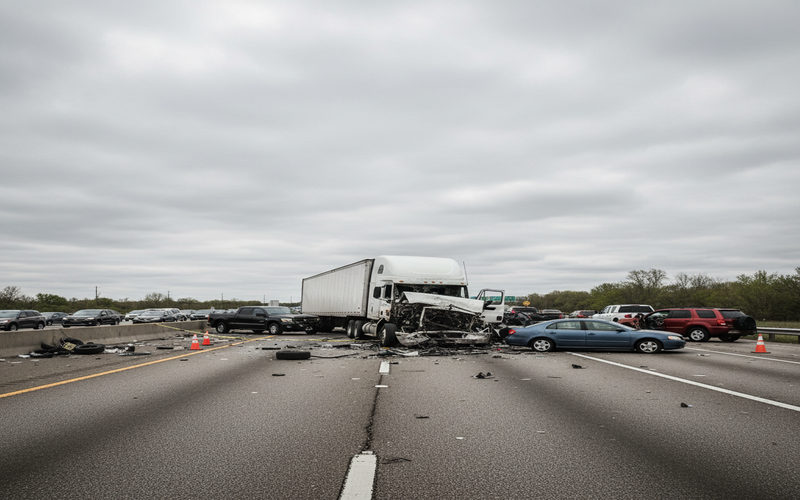
Legal Liability in 18-Wheeler Accidents: Who Pays and Why
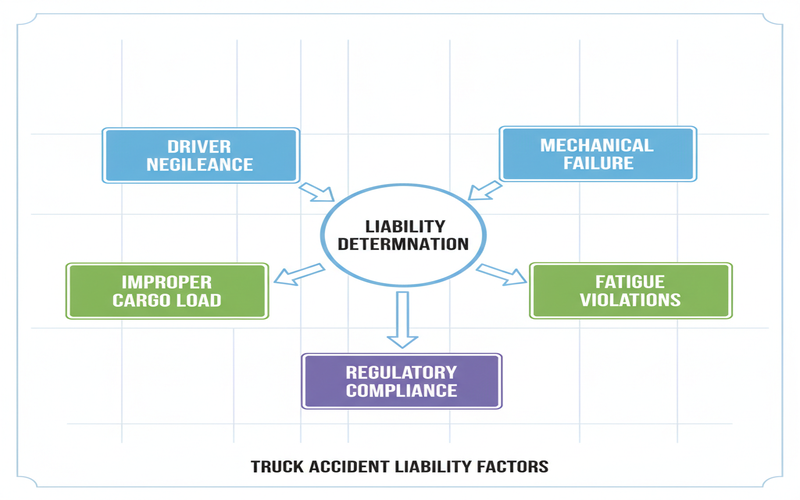
Standard car accident cases involve two drivers and two insurance policies. Truck accident cases are more complex. An 18-wheeler accident lawyer must identify every party whose negligence contributed to the crash. The law allows recovery from each negligent party. Your job is to find them all.
The Truck Driver’s Responsibility
The driver is the first defendant. But drivers are constrained by federal law. Hours-of-service regulations limit how long a driver can operate before mandatory rest. Fatigue-impaired driving is as dangerous as intoxication. When federal logbooks show a driver working beyond legal limits, that’s negligence. When a driver admits they didn’t sleep the night before, that’s negligence. When a driver was texting or on their phone at the moment of impact, that’s negligence. An 18-wheeler accident lawyer pulls logbooks, dispatch records, and driver statements. We reconstruct the driver’s timeline. We compare it to federal regulations. When violations exist, we prove them. We also request in-cab camera footage if available, cellular phone records to check for distracted driving, and witness statements about the driver’s pre-accident behavior.
Practical rule: Federal regulations require 10 consecutive hours off-duty after 11 hours of driving. Violating this rule creates a presumption of driver negligence in Georgia courts. An 18-wheeler accident lawyer uses this presumption to shift the burden of proof to the defendant.
The Trucking Company’s Liability
Trucking companies are responsible for hiring safe drivers, maintaining vehicles, and enforcing safety policies. When a company hires a driver with a history of safety violations, that’s negligence. When a company fails to maintain brakes that should have been replaced, that’s negligence. When a company ignores a driver’s complaint about faulty equipment, that’s negligence. When a company incentivizes drivers to skip required rest periods to meet delivery deadlines, that’s negligence. An 18-wheeler accident lawyer sues the company for negligent hiring, negligent retention, and negligent maintenance. These cases are worth more because companies have insurance policies with higher limits. A typical case against a driver might be worth $100,000. The same case against the trucking company might be worth $500,000 or more. We investigate the company’s hiring practices. We review driver personnel files. We look for prior complaints, safety violations, or disciplinary records that should have prevented hiring or should have resulted in termination.
Maintenance and Repair Contractors
Trucking companies often contract brake service, tire replacement, and inspections to third-party shops. If that shop fails to properly maintain equipment, they’re liable. A brake line that leaks because of improper repair makes the repair company liable. A tire that blows because it wasn’t properly inspected or maintained makes the tire service liable. An 18-wheeler accident lawyer investigates maintenance records. We subpoena repair invoices. We hire expert mechanics to review the work. When defective repairs contributed to the accident, the repair contractor pays. We also request warranty information, parts inventory records, and technician certification documentation to establish whether the repair shop had qualified personnel performing the work.
Cargo Loaders and Freight Brokers
Cargo companies that overload trucks or fail to secure freight properly create liability. Trucks are legally limited to 80,000 pounds total weight. When scales show a truck was overweight, the cargo company that loaded it bears liability. When cargo shifts and causes a rollover, the cargo company bears responsibility. Freight brokers who arrange shipments for unsafe companies may also be liable. An 18-wheeler accident lawyer doesn’t just look at the truck. We look at everything that was inside it and everyone who put it there. We obtain weight tickets from truck scales. We review shipping documentation. We identify the cargo loader and freight broker. We investigate their safety histories.
Tire Manufacturers and Equipment Makers
Defective tires, brakes, steering components, or other equipment may have caused the accident. When a tire fails because it was manufactured defectively, the tire manufacturer is liable. When brake components fail due to design flaws, the manufacturer is liable. An 18-wheeler accident lawyer obtains the truck’s maintenance records to identify all components. We hire engineers to test components for defects. When we find evidence of a defective product, we add the manufacturer to the lawsuit.
Evidence Collection in Truck Accident Cases
Standard car accident cases rely on police reports and witness statements. Truck accident cases require evidence that doesn’t exist in normal crashes. Your 18-wheeler accident lawyer must know where to find this evidence and how to preserve it before it disappears.
Electronic Data Recorders (EDRs) and Black Boxes
Modern trucks have computers that record data: speed, brake application, steering input, engine performance, throttle position, and more. This data is stored on the vehicle. An 18-wheeler accident lawyer files preservation notices immediately to prevent trucking companies from deleting this data. We hire data recovery experts to download and analyze the EDR. When data shows the truck was traveling 75 mph in a 55 mph zone when the accident occurred, that’s proof of negligence. When data shows the driver never applied brakes before impact, that’s evidence of driver inattention. When data shows rapid deceleration indicating brake failure, that’s evidence of equipment defect. This data is often the most powerful evidence in your case.
Practical rule: EDR data must be preserved within 72 hours of an accident. If your attorney doesn’t send preservation letters immediately, this evidence is legally gone. Trucking companies have no obligation to keep data that wasn’t formally requested. Don’t delay in hiring your attorney.
Logbooks and Hours-of-Service Violations
Federal regulations require drivers to maintain logbooks showing hours worked, rest periods, and location. These are required by the Federal Motor Carrier Safety Administration (FMCSA). An 18-wheeler accident lawyer gets logbooks from the carrier. We compare them to dispatch records, GPS data, and fuel receipts. When discrepancies appear, we hire forensic accountants and logistics experts. We’ve found drivers falsifying logbooks to hide hours-of-service violations. We’ve found companies encouraging drivers to violate federal limits to meet delivery deadlines. This evidence transforms cases. It proves the company prioritized profit over safety. It proves the company knew about the violations and approved them. Juries hate this.
Maintenance and Inspection Records
Federal law requires commercial trucks to undergo regular inspections. Records show which components passed and which were flagged for repair. When records show brakes were flagged as unsafe but never repaired, that’s evidence. When records show inspections were never performed, that’s evidence of negligence. When records are missing entirely, that’s evidence the company deliberately destroyed them. An 18-wheeler accident lawyer subpoenas years of maintenance records. We hire mechanics to review them. We calculate when brakes should have failed based on mileage and usage patterns. We document every missed inspection and every deferred repair.
Surveillance Video and Accident Scene Photography
Highway accidents often occur near businesses with security cameras. A gas station, restaurant, warehouse, or traffic light intersection near the accident scene may have video. This video can show the truck’s approach speed, the driver’s attention level, and the moment of impact. We hire investigators who canvass the accident area within hours. We recover video before it’s recorded over (most systems record over footage after 30 days). We photograph the scene with measurements and expert annotations. We document skid marks, vehicle positions, debris patterns, and road conditions. This documentation becomes invaluable later.
Cell Phone Records and Distracted Driving Evidence
If the driver was texting, talking, or using navigation at the moment of impact, that proves distraction. An 18-wheeler accident lawyer subpoenas the driver’s cell phone records. We obtain tower location data. We match call times to the accident time. We request the police investigate whether the driver was using their phone. When we find evidence of distraction, it strengthens liability and increases damages.
Medical Records and Expert Opinions
Your injuries must be documented completely. Every doctor visit, every test, every treatment must be recorded. An 18-wheeler accident lawyer organizes your medical records chronologically. We have specialists review them. We hire independent medical experts to evaluate your injuries. We obtain opinions about future treatment needs. We calculate lifetime medical costs. Medical evidence directly determines how much you recover.
Federal Motor Carrier Safety Administration (FMCSA) Regulations
When standard cars collide, Georgia tort law applies. When commercial trucks collide, federal safety regulations provide additional leverage. The 18-wheeler accident lawyer understanding FMCSA rules has a significant advantage. These regulations were written after decades of accidents. They represent decades of safety learning.
What FMCSA Regulations Require
The FMCSA sets national safety standards for commercial vehicle operations. These include driver qualifications, vehicle maintenance, hours of service, hazmat transport, and accident reporting. When a trucking company violates FMCSA regulations, that violation can be used as evidence of negligence in a Georgia lawsuit. In fact, a violation of an FMCSA regulation that directly caused your injury allows you to pursue damages under federal negligence standards, which are often more favorable than Georgia state law. The regulations exist because they save lives. When companies violate them, they’re choosing profit over safety.
Practical rule: A violation of FMCSA regulations in 49 CFR 391 (driver qualifications) is per se negligence. You don’t have to prove the company was careless. The violation itself constitutes proof of negligence. An 18-wheeler accident lawyer uses this rule to establish liability quickly and definitively.
Drug and Alcohol Testing Requirements
Federal law requires random drug and alcohol testing of commercial drivers. When an accident occurs, the driver must be tested within specific timeframes (30 minutes for alcohol, 32 hours for drugs). If the company failed to test the driver, that failure is evidence of negligence or cover-up. If the company destroyed test results, that destruction suggests the results were incriminating. An 18-wheeler accident lawyer investigates whether testing protocols were followed. We determine if results were accurately documented. We request the test results. When violations exist, we use them as leverage in settlement negotiations or at trial.
Training and Qualifications
FMCSA regulations require commercial driver training and documented qualifications. A commercial driver’s license (CDL) requires testing. Hazmat endorsements require certification. Passenger transport requires special licensing. When a company hires a driver without proper commercial licensing, that’s negligence. When a company assigns a driver to haul hazardous materials without hazmat certification, that’s negligence. An 18-wheeler accident lawyer reviews driver files. We verify licenses, endorsements, and training documentation. We’ve found companies hiring drivers with suspended licenses. We’ve found drivers operating trucks they weren’t legally qualified to operate. When qualifications are missing, we prove the company violated federal law.
Vehicle Maintenance Standards (49 CFR 396)
Federal regulations specify exactly how often commercial vehicles must be inspected and maintained. Brakes must be inspected quarterly. Lights must be inspected before every trip. Tires must meet specific tread depth requirements. When trucks don’t meet these standards, they’re unsafe. An 18-wheeler accident lawyer compares the truck’s maintenance records to federal standards. When we find violations, we prove the company operated an unsafe vehicle.

The YouTube Evidence: Understanding Truck Accident Dynamics
Videos explaining truck accident safety can help you understand how these collisions happen and why they’re so serious. Here’s an educational resource:
While this video focuses on general accident procedures, the principles apply to truck accidents as well. The key takeaway is that collecting evidence immediately after an accident is critical. Don’t move your vehicle unless police direct you to. Document everything with photos and video. Get witness information. Call emergency services. Report the accident to police. These steps are the same whether you’ve been hit by a sedan or a semi-truck.
Georgia Comparative Negligence and Your Recovery
Georgia follows a “comparative negligence” standard. If you were partially at fault for the accident, your damages are reduced by your percentage of fault. But in 18-wheeler accident lawyer cases, the driver or company is almost always primarily at fault. Your actions rarely compare to a truck driver’s decision to violate federal hours-of-service rules or a company’s decision to defer brake maintenance.
How Georgia Courts Calculate Fault
A jury determines the percentage of fault each party bears. If you were 10% at fault and the trucking company was 90% at fault, you recover 90% of your damages. If the jury determines you were 30% at fault, you recover 70% of your damages. But Georgia law caps your liability: if you’re found more than 50% at fault, you recover nothing. An 18-wheeler accident lawyer works to keep your fault percentage as low as possible. We focus jury attention on the truck driver’s violations. We downplay any minor mistakes you may have made. We present evidence that the truck driver had the last chance to avoid the collision but failed to do so.
Practical rule: In cases where a truck driver violated federal hours-of-service regulations, Georgia juries rarely assign the victim more than 5-10% fault, regardless of the victim’s minor traffic mistakes. The violation is so serious that courts consider your conduct relatively inconsequential.
Multiple Defendants and Several Liability
When multiple parties are negligent, you can sue all of them. Georgia law allows you to recover full damages from any defendant who is found liable. The defendant who pays then pursues contribution claims against co-defendants. This means an 18-wheeler accident lawyer sues the driver, the company, the maintenance contractor, and the cargo loader. You’re not limited to recovering from just one source. You pursue every negligent party. This approach maximizes your recovery.
Settlement vs. Trial in Truck Accident Cases
Most 18-wheeler accident lawyer cases settle before trial. Insurance companies representing trucking companies understand the liability exposure. When evidence is strong—EDR data showing speed violations, logbooks showing hours-of-service violations, maintenance records showing deferred repairs—settlements happen quickly.
Why Insurance Companies Settle Truck Cases
A jury verdict in a truck accident case can reach $2 million, $5 million, or more. Insurance companies have actuaries who calculate expected jury awards. When the evidence is overwhelming, the expected verdict exceeds the company’s settlement authority. Negotiating a resolution becomes the rational economic choice. An experienced 18-wheeler accident lawyer knows what cases are worth. We tell you early whether a jury verdict would likely exceed any settlement offer on the table. We use this knowledge to negotiate aggressively.
Trial Preparation and Expert Witnesses
When cases don’t settle, an 18-wheeler accident lawyer prepares for trial with expert witnesses. We hire medical experts to testify about your injuries. We hire accident reconstruction engineers to explain what happened. We hire trucking industry experts to explain why certain practices violated safety standards. We hire economists to calculate your lifetime earnings loss. We hire safety inspectors to testify about maintenance violations. Each expert strengthens your case. Trucking companies know this. When they see a well-prepared case with credible experts, they often settle rather than risk a jury verdict.
Practical rule: The cost of preparing a truck accident case for trial is $50,000 to $150,000 in expert fees alone. This investment signals seriousness. Insurance companies recognize it. They know you’re not bluffing. Settlement negotiations accelerate when they see this commitment.
Jury Appeal in Truck Cases
Juries tend to be sympathetic to truck accident victims. The size disparity is visually obvious. The victim is usually seriously injured. The defendant is a large company motivated by profit. This isn’t a case where both parties made innocent mistakes. This is a case where a company chose to cut corners on safety. Juries punish this choice. An 18-wheeler accident lawyer knows how to present this narrative to a jury. We select jurors sympathetic to injury victims. We explain the physics so jurors understand the severity. We present evidence methodically. We make juries angry at the company’s negligence. When juries get angry, they award more money.
How an 18-Wheeler Accident Lawyer Maximizes Your Compensation
The difference between handling your case alone and retaining an 18-wheeler accident lawyer is often hundreds of thousands of dollars. This isn’t an exaggeration. It’s based on actual case results.
Identifying All Liable Parties
Without legal help, you might accept a settlement from the truck driver’s insurance without realizing the trucking company also bears liability. Without investigation, you might never identify the cargo company that overloaded the truck. You might never discover the maintenance contractor that failed to repair brakes. An 18-wheeler accident lawyer investigates the entire accident ecosystem. We identify everyone whose negligence contributed. We pursue claims against each defendant. We maximize your total recovery.
Expert Investigation and Evidence Preservation
Within days of an accident, critical evidence can be lost. EDR data is deleted. Witnesses move. Surveillance video is recorded over. Medical records are filed away. An 18-wheeler accident lawyer acts immediately. We send preservation letters to the trucking company, cargo loader, maintenance contractor, and all other potential defendants. We hire investigators. We recover evidence before it disappears. We document the scene while details are fresh. We get medical records before they’re archived. We contact witnesses before they forget. This proactive approach protects your case.
Negotiating with Insurance Companies
Insurance adjusters for trucking companies are skilled negotiators. They work to minimize settlements. They know injured people are desperate for money. They exploit this desperation with lowball offers and high-pressure tactics. An experienced 18-wheeler accident lawyer is a counterweight. We understand insurance industry practices. We know how much cases are worth. We push back against lowball offers. We’ve negotiated settlements at double or triple the initial offers. We don’t get pressured. We know the law. We know the facts. We know what juries award. Insurance companies respect this.
Practical rule: Insurance companies offer accident victims an average of 40-50% of case value without legal representation. Hiring an 18-wheeler accident lawyer typically results in settlements 2-3 times higher than initial offers. The attorney’s contingency fee is almost always recovered through the increased settlement.
Calculating Damages Beyond Medical Bills
Many injured people calculate damages as just medical expenses. An 18-wheeler accident lawyer calculates true damages: past medical expenses, future medical expenses, lost wages, lost earning capacity, pain and suffering, emotional distress, and diminished quality of life. A spinal injury might require multiple surgeries over 20 years. We calculate the cost of all anticipated treatment. We consult with your treating physicians about long-term needs. A job loss might mean permanent career disruption. We calculate lost income for the remainder of your working life. A chronic pain condition might prevent you from enjoying hobbies or family activities. We assign a dollar value to that lost quality of life. We interview you about how the injury changed your life. We present evidence of your past activities and hobbies. We show what you’ve lost.
Common Questions About 18-Wheeler Accidents
| Question | Answer |
|---|---|
| How long do I have to sue after an 18-wheeler accident? | Georgia’s statute of limitations is 2 years from the accident date. You must file a lawsuit within this period or lose the right to recover. Don’t wait. Contact an 18-wheeler accident lawyer immediately. |
| What if the truck driver was independent (not employed by a company)? | Independent drivers are still liable. They’re responsible for their own negligence and their own vehicle maintenance. An 18-wheeler accident lawyer still investigates and pursues claims, though damages may be smaller because independent drivers often have fewer insurance resources. |
| Can I still recover if I was partially at fault? | Yes. Georgia’s comparative negligence law allows recovery even if you were partially at fault, as long as you’re less than 50% at fault. An 18-wheeler accident lawyer fights to minimize your fault percentage and maximize your recovery. |
| How much is my case worth? | It depends on injury severity, liability strength, and insurance limits. Minor injuries might be worth $50,000-$200,000. Severe injuries with clear liability might be worth $500,000 to $2,000,000+. An 18-wheeler accident lawyer evaluates your specific case and provides realistic valuation. |
| Do I need to go to trial? | Most cases settle before trial. Insurance companies prefer to avoid jury trials because jury verdicts in truck accident cases are often higher than settlement offers. Your attorney will advise whether a jury trial makes sense for your specific case. |
| What if I missed the statute of limitations? | The statute of limitations is usually 2 years, but exceptions exist. If you were a minor when injured, the clock may not have started. Contact an 18-wheeler accident lawyer immediately to determine if you still have rights. |
| How do I choose an 18-wheeler accident lawyer? | Choose a lawyer with specific experience in truck accident cases. Ask about verdicts and settlements. Ask about relationships with medical experts. Ask about the attorney’s investigation process. Experience matters in these complex cases. |
| Will I have to take time off work for depositions and trial? | Possibly. You may need to attend a deposition (usually 2-4 hours) and potentially a trial. Your attorney will minimize your time commitment. Most cases settle before trial, so time off is often minimal. |
Get Your Recovery Started Today
An 18-wheeler accident lawyer is not a luxury. It’s the difference between getting fair compensation and being exploited by insurance companies. At Humphrey & Ballard Law, we’ve spent decades investigating truck accidents. We know every regulation. We understand every liability pathway. We recover money for injured Georgians. We work on contingency—you pay no fees unless we recover compensation for you. Your call is free. Your consultation is free. Your recovery shouldn’t wait.
Call Humphrey & Ballard Law today: (404) 446-9854 for your free case evaluation. We’re here to fight for your recovery.
About Humphrey & Ballard Law
Humphrey & Ballard Law is Atlanta’s trusted personal injury attorney firm. For over 20 years, principals Desmond Humphrey and David Ballard have fought for injured Georgians. We’ve recovered over $150 million in settlements and verdicts. We specialize in car accidents, truck accidents, brain injuries, slip-and-fall cases, and wrongful death claims. We represent clients across Atlanta and throughout Georgia. We’re based in Atlanta and serve your community with 24/7 emergency support.
