If someone’s actions have caused you severe emotional distress lawyers know you may have a legal claim. Emotional distress can include anxiety, depression, fear, humiliation, or loss of sleep caused by someone’s wrongful conduct. Georgia recognizes two types of emotional distress claim: intentional infliction of emotional distress (IIED) and negligent infliction of emotional distress (NIED). When another person’s behavior crosses the line from hurtful to illegal, emotional distress lawyers can help you pursue compensation for your psychological injuries. Many victims don’t realize they can recover damages beyond physical injury. An experienced emotional distress lawyer understands Georgia law and knows how to prove your suffering in court.
Emotional distress claims are different from other personal injury cases. You won’t have visible bruises or broken bones. Instead, you’re seeking compensation for psychological harm and mental suffering. Georgia courts recognize that severe emotional trauma is real and damaging. Medical records, therapy notes, and expert testimony help prove your emotional distress claim. Emotional distress lawyers gather evidence and build a compelling narrative about your suffering. The goal is to show the court exactly how this experience has changed your life.
Emotional distress attorneys at Humphrey & Ballard Law have helped Atlanta residents recover compensation for psychological injuries caused by other people’s wrongful acts. These cases require specialized knowledge of Georgia tort law. Many people don’t know when they have a valid claim. Some don’t realize they can hire emotional distress lawyers to fight for their rights. If you’re experiencing ongoing anxiety, depression, or trauma from someone’s actions, a consultation with emotional distress lawyers can clarify your options.
What Is Intentional Infliction of Emotional Distress in Georgia?
Intentional infliction of emotional distress (IIED) is one of two ways to pursue an emotional distress claim under Georgia law. IIED occurs when someone intentionally or recklessly engages in extreme and outrageous conduct that causes severe emotional distress. The conduct must be so extreme that it exceeds all bounds of decency. Average insults, rudeness, or even threats usually don’t qualify. The defendant’s behavior must be truly shocking to a reasonable person. Georgia courts have set a high bar for IIED claims to prevent frivolous lawsuits based on minor disputes or hurt feelings.
Elements of an IIED Claim
To win an IIED lawsuit, an emotional distress attorney must prove four elements. First, the defendant acted intentionally or recklessly. Second, the conduct was extreme and outrageous. Third, the defendant’s conduct caused emotional distress. Fourth, the distress was severe. Each element must be established by clear and convincing evidence. This is a higher burden of proof than typical negligence cases. Emotional distress lawyers know how to present evidence that meets this rigorous standard. Under Georgia courts precedent, all four elements must be proven convincingly.
Examples of conduct that may support an IIED lawsuit include:
- Repeated, severe harassment or stalking behavior directed at a victim
- False imprisonment or unlawful confinement lasting hours or days
- Extreme verbal abuse directed at a vulnerable person such as the elderly
- Deliberate humiliation or public ridicule in front of an audience
- Threatening behavior causing fear of imminent harm to person or family
- Employer retaliation involving severe mistreatment and public shaming
The “extreme and outrageous” standard is intentionally high. Georgia courts want to prevent frivolous claims based on hurt feelings. However, when conduct truly crosses the line, emotional distress lawyers can build a powerful case. Documented patterns of behavior are particularly persuasive. Medical evidence of resulting psychological injury strengthens your claim. According to the Georgia Bar Association, psychological injuries deserve the same legal protections as physical injuries.
Negligent Infliction of Emotional Distress in Georgia
Negligent infliction of emotional distress (NIED) is the second type of emotional distress claim. Unlike IIED, the defendant doesn’t need to act intentionally. Instead, the defendant’s negligent conduct—failing to exercise reasonable care—causes your emotional distress. This might happen when someone’s careless actions put you in immediate danger or cause you to witness a traumatic event. Emotional distress attorneys handle both IIED and NIED cases across Georgia. NIED claims can arise from medical errors, funeral home negligence, or witnessing accidents.
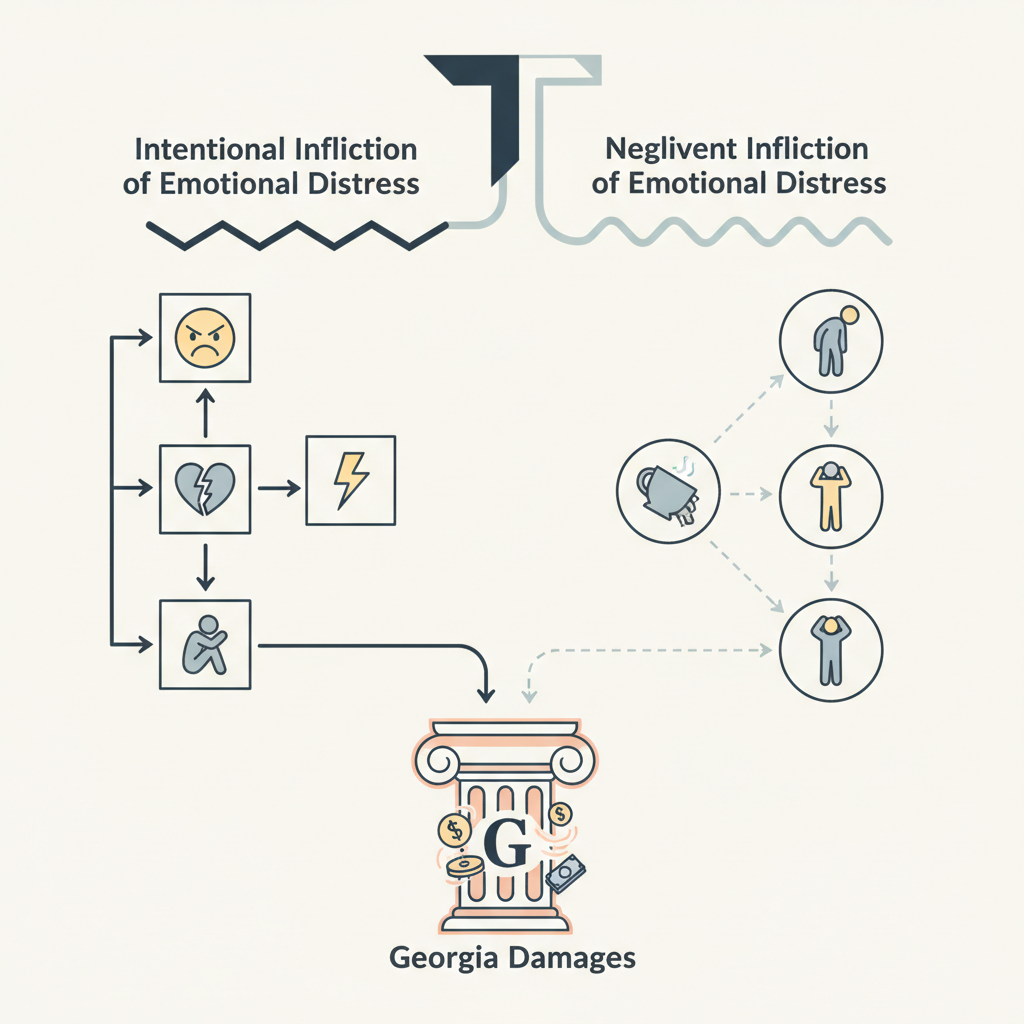
Key Differences Between IIED and NIED
IIED requires intentional or reckless conduct, while NIED requires only negligent conduct. NIED is sometimes easier to prove because the bar is lower. However, Georgia has strict rules about when you can recover for negligent emotional distress. You must have suffered “genuine and serious emotional distress.” You can’t simply be worried or upset. The distress must cause physical manifestations like sleep loss, weight loss, or medical treatment. Documentation of these symptoms is critical to proving your claim.
One common NIED claim involves witnessing a serious accident involving a family member. If you see a loved one struck by a car due to someone’s negligent driving, you may have grounds for emotional distress damages. Another example is receiving negligent medical diagnosis that causes severe psychological harm. Mishandling a deceased person’s remains in a funeral home context can support an NIED claim. Emotional distress lawyers evaluate whether your specific situation qualifies under Georgia law. Proximity to the traumatic event matters greatly in NIED cases.
Georgia Law Standards for Emotional Distress Damages
Georgia courts apply strict requirements to emotional distress claims. Your emotional distress attorney must prove genuine, serious emotional distress—not mere disappointment or brief upset. The law recognizes that everyone experiences stress. To recover damages, your suffering must be substantial and verifiable. Medical documentation is essential. Testimony from a mental health professional greatly strengthens your case. Georgia recognizes workers’ compensation psychology and the mental health impacts of workplace injury.
Proving Your Emotional Distress in Court
Emotional distress lawyers use several types of evidence to prove your suffering. Medical records from your doctor showing treatment for anxiety or depression are powerful. Psychiatric or psychological evaluation reports carry significant weight. Testimony from your therapist about the nature and duration of your condition is compelling. Your own testimony describing how the emotional distress has affected daily functioning matters. Work records showing missed time or lost productivity provide context. Testimony from family members about changes in your behavior and mood helps. Documented treatment costs show the seriousness of your injury. Evidence of before and after behavior changes is particularly persuasive.
Expert testimony is often necessary in emotional distress claims. A psychiatrist or psychologist can explain the connection between the defendant’s conduct and your psychological injury. They can testify about the severity of your condition and its expected duration. They can also address whether your symptoms are consistent with standard diagnostic criteria. This expert foundation makes your case more compelling to a judge or jury. Emotional distress attorneys work with qualified mental health experts who understand legal standards. Expert reports must meet Georgia Rules of Evidence standards for admissibility.
| Type of Evidence | Why It Matters |
|---|---|
| Medical treatment records | Shows you sought professional help and your condition was serious |
| Psychiatric evaluation | Provides professional assessment of your emotional distress |
| Therapist testimony | Establishes duration and severity of your psychological injury |
| Your sworn testimony | Describes daily impact and personal suffering from emotional distress |
| Family member accounts | Corroborates behavioral changes and emotional symptoms |
| Employment records | Shows lost income or job performance decline from emotional distress |
Workplace Harassment and Emotional Distress Claims
One common source of emotional distress claims is workplace harassment and abuse. Supervisors or coworkers sometimes engage in behavior severe enough to support legal action. This might include racial harassment, sexual harassment, or relentless bullying. Emotional distress lawyers often help employees who’ve suffered at work. Documenting everything—dates, witnesses, specific statements—is crucial. HR complaints create a paper trail. Medical records from mental health treatment strengthen your position. Workplace harassment may also violate state and federal employment law.
When Workplace Behavior Becomes Actionable
Not every unpleasant workplace situation supports an emotional distress claim. Your supervisor being difficult doesn’t usually qualify. Occasional critical comments don’t meet the threshold. The conduct must be extreme and outrageous by Georgia standards. Sustained patterns of severe harassment are more likely to succeed. Conduct targeted at protected characteristics (race, gender, age) may also support discrimination claims. Emotional distress attorneys evaluate whether your situation meets Georgia’s demanding standard. Some conduct may violate both Georgia tort law and federal civil rights statutes.
Practical rule: Keep detailed records of harassment incidents, including dates, times, witnesses, and what was said. These notes are invaluable if you later pursue an emotional distress claim.

Special Situations and Edge Cases
Some emotional distress claims arise in unusual circumstances. Understanding these scenarios helps you recognize when you might have a case. Emotional distress lawyers handle diverse situations beyond typical harassment or assault. Each situation requires careful legal analysis under Georgia’s unique standards.
Bystander Emotional Distress
You may recover for emotional distress if you witness a serious accident involving a close family member. Georgia recognizes that watching a loved one suffer traumatic injury causes genuine psychological harm. However, you must have been physically present and reasonably knew a close family member was in danger. Simply hearing about an accident to a family member usually doesn’t qualify. NIED claims for bystanders require strict proof of relationship and proximity to the incident. Georgia’s bystander rule is more restrictive than some other states.
Mishandling of Remains
Funeral homes that mishandle deceased persons’ remains may face emotional distress claims from family members. When a body is lost, desecrated, or misidentified, grieving families suffer additional trauma. This is a specialized area where emotional distress attorneys often succeed. Georgia courts recognize the unique injury caused by disrespect to a deceased loved one. Documentation from the funeral home and medical examiner helps establish the facts. These cases often involve breach of contract claims in addition to emotional distress.
Medical Malpractice with Psychological Impact
Serious medical errors sometimes cause both physical and psychological injury. A surgeon operating on the wrong body part might cause severe emotional distress even if physical harm is minimal. Misdiagnosis of a life-threatening condition may cause months of fear before correction. These cases require careful legal analysis. Emotional distress lawyers work with medical experts to establish the malpractice and resulting psychological injury. Medical malpractice claims often require expert medical testimony to establish the standard of care.
How Emotional Distress Damages Are Calculated
Calculating damages in emotional distress claims differs from physical injury cases. There’s no fixed formula. Factors considered include the severity of your suffering, the duration of your condition, treatment costs, and impact on your life. Emotional distress damages typically include past and future medical expenses, therapy costs, and compensation for pain and suffering. Juries consider comparable cases when setting damage awards.
Past and Future Medical Expenses
You can recover all reasonable costs of treating your emotional distress. This includes psychiatric evaluations, therapy sessions, medication costs, and hospitalization if needed. Keep detailed records of every expense. Receipts and insurance explanations of benefits document your costs. Future treatment costs must be estimated with expert testimony. A mental health professional can testify about ongoing care needs and expected duration. Emotional distress lawyers work with economists to calculate lifetime costs of treatment. Vocational rehabilitation costs may also be recoverable if your condition affects work capacity.
Pain and Suffering Damages
Beyond medical expenses, you can recover for the pain and suffering caused by your emotional distress. This compensates you for anxiety, sleep loss, depression, and reduced quality of life. Georgia juries have wide discretion in setting these damages. Presenting your personal story effectively is crucial. Testimony about how the emotional distress has changed your relationships, work, and daily activities persuades juries. Some cases result in substantial pain and suffering awards. Emotional distress attorneys understand how to present compelling testimony that resonates with jurors. Lost enjoyment of life is a major component of pain and suffering damages.
Practical rule: Document everything related to your treatment and suffering. Keep a journal describing daily emotional symptoms and their impact on your life.
Statute of Limitations for Emotional Distress Claims in Georgia
You have a limited time to file an emotional distress claim in Georgia. Understanding the statute of limitations is essential. Waiting too long means losing your right to recover. Emotional distress lawyers immediately analyze the timeline to protect your claim. Missing the deadline by even one day can be fatal to your case.
Time Limits for Different Types of Claims
For IIED claims based on intentional conduct, Georgia’s statute of limitations is typically two years from the date you discovered the injury. For NIED claims based on negligent conduct, the timeframe is also generally two years. However, special circumstances can extend or reduce these deadlines. If the defendant is a government entity, notice requirements and claims procedures differ significantly. Emotional distress attorneys file claims properly within required timeframes. Missing a deadline can bar your claim forever. Some cases involve tolling that extends the deadline if you couldn’t have discovered the injury earlier.
Practical rule: Don’t delay consulting an emotional distress lawyer. Time limits are strict and inflexible. Acting promptly protects your legal rights.
How Emotional Distress Lawyers Build a Winning Strategy
Experienced emotional distress lawyers approach each case strategically. We also help clients with traumatic brain injury and workplace injuries. They understand Georgia law and know how to present your claim persuasively. From initial consultation through trial, a solid strategy guides the case. Emotional distress attorneys evaluate all available evidence and anticipate defense arguments. A comprehensive strategy maximizes your recovery.
Investigation and Evidence Gathering
Your emotional distress attorney begins by thoroughly investigating the facts. They obtain medical and mental health records. They identify and interview witnesses who can testify about the defendant’s conduct or your resulting suffering. They obtain any video, audio, or documentary evidence of the wrongful conduct. They request employment records, text messages, emails, or other communications. This thorough foundation makes your case stronger. Emotional distress lawyers leave no stone unturned in building your claim. Digital evidence like text messages can be particularly powerful.
Expert Witness Preparation
Emotional distress claims almost always require expert testimony. Your emotional distress attorney works with qualified mental health professionals. They prepare the expert to explain your diagnosis and symptoms in clear, understandable terms. They rehearse testimony to ensure effective presentation. The expert must connect your symptoms directly to the defendant’s conduct. A poorly prepared expert witness can undermine your case. Emotional distress lawyers ensure expert testimony is compelling and legally sound. The expert’s credentials and experience are critical to credibility.
Practical rule: Your emotional distress attorney should meet with you multiple times to understand your full story and how you’ve been affected.

Why You Need an Experienced Emotional Distress Attorney
Emotional distress claims are among the most challenging cases in personal injury law. They require deep understanding of Georgia’s demanding legal standards. They require skill in presenting psychological evidence to skeptical fact-finders. An experienced emotional distress attorney knows how to overcome judicial skepticism about psychological injury. They understand how to frame your suffering in legally compelling ways. Insurance companies are particularly skeptical of emotional distress claims and fight hard to minimize damages.
Insurance Company Tactics
Insurance companies are particularly aggressive in defending emotional distress claims. They may argue your suffering isn’t genuine. They may question whether it’s severe enough to meet Georgia’s standards. They may attempt to minimize damages. They have experienced defense attorneys fighting your claim. You need an emotional distress lawyer equally skilled and prepared. The insurance company won’t respect unrepresented claimants. Emotional distress attorneys level the playing field and protect your interests. Insurance companies use psychological research to challenge your claims.
Avoiding Common Mistakes
Unrepresented claimants make critical errors that destroy emotional distress claims. Posting on social media about your activities can contradict claims of severe suffering. Discussing your case with others may compromise testimony. Making early settlement offers without understanding your claim’s value wastes money. Failing to preserve evidence allows it to disappear. Emotional distress lawyers guide you away from these pitfalls. They ensure your case is handled properly from start to finish. Their experience prevents costly mistakes that could tank your claim. Social media posts are often used against plaintiffs in emotional distress cases.
Pursuing Your Emotional Distress Claim: Next Steps
If you’re suffering from emotional distress caused by someone’s wrongful conduct, taking action protects your rights. The statute of limitations won’t wait. Georgia law may allow you to recover damages for your psychological injury. An experienced emotional distress attorney can evaluate your situation and explain your options. Many emotional distress lawyers offer free initial consultations. This gives you a chance to discuss your case without financial pressure. Early action also helps preserve important evidence.
What to Expect in Consultation
During your consultation, your emotional distress attorney will ask detailed questions about what happened and how it affected you. They’ll review any documentation you have. They’ll explain Georgia law and whether your situation qualifies for an emotional distress claim. They’ll discuss potential damages and likely outcomes. They’ll answer your questions about the legal process. They’ll explain their fees and how they work. A good emotional distress attorney makes you feel heard and provides honest assessment of your case prospects. Free consultations let you evaluate whether the attorney is right for your case.
Practical rule: Bring all relevant documentation to your consultation with an emotional distress attorney—medical records, communications, photos, anything documenting the wrongful conduct and your suffering.
Frequently Asked Questions About Emotional Distress Lawyers
| Question | Answer |
|---|---|
| Can I recover for emotional distress without physical injury? | Yes. Georgia law recognizes emotional distress claims based solely on psychological injury when the defendant’s conduct is extreme and outrageous or negligent. |
| How much are typical emotional distress damages? | Damages vary widely based on severity and duration of suffering. Some cases settle for thousands, others for hundreds of thousands. Your emotional distress attorney evaluates comparable cases. |
| Do I need a mental health professional to pursue an emotional distress claim? | Not required, but strongly recommended. Medical documentation from a therapist or psychiatrist significantly strengthens your case and increases credibility. |
| Can I sue for emotional distress caused by verbal abuse alone? | Only if the verbal abuse is extreme and outrageous—not merely hurtful. The conduct must exceed reasonable societal tolerance to meet Georgia’s demanding standard. |
| How long does an emotional distress claim take to resolve? | Cases vary. Some settle in months with good early negotiation. Others proceed to trial taking 1–2 years. Your emotional distress attorney manages the timeline. |
| What if the defendant doesn’t have insurance? | You can still pursue an emotional distress claim against an individual. Collection may be difficult, but judgment can attach to personal assets. Your emotional distress attorney explores all options. |
| Can I settle an emotional distress claim without going to trial? | Yes. Many cases settle through negotiation. Your emotional distress attorney negotiates aggressively but will take your case to trial if needed. |
| Is there any cap on emotional distress damages in Georgia? | No statutory cap on emotional distress damages. Your recovery is limited only by the evidence and the jury’s assessment of your suffering. |
Recover for Your Emotional Distress Today
Humphrey & Ballard Law has helped Atlanta residents recover compensation for emotional distress caused by others’ wrongful conduct. If you’re suffering from severe psychological injury, you may be entitled to damages. The sooner you take action, the better. Evidence becomes harder to locate and memories fade with time. Call (404) 446-9854 for a free consultation with an experienced emotional distress attorney. Contact us online if you prefer to reach out by email. Humphrey & Ballard Law handles emotional distress claims on a contingency basis—you pay nothing unless we recover compensation. Our team has recovered millions for injured clients.
About Humphrey & Ballard Law
Humphrey & Ballard Law is a respected personal injury law firm serving Atlanta and the surrounding areas of Georgia. The firm specializes in helping injured people recover full compensation for their losses. Principals Desmond Humphrey and David Ballard have decades of combined experience handling complex injury cases. The firm works with clients on a contingency basis, meaning there’s no upfront cost. Humphrey & Ballard Law is committed to providing aggressive representation and compassionate counsel to every client they serve. Whether your injury is physical or psychological, the firm fights for your rights.
