An Atlanta slip and fall attorney at Humphrey & Ballard Law fights for victims of premises liability accidents throughout Georgia. When a property owner’s negligence creates a dangerous condition, and you are hurt because of it, Georgia law holds that owner responsible.
“The most important thing after a slip and fall is not to apologize or minimize what happened. Report it to management immediately, get the report in writing, and seek medical attention the same day. Every action you take in the first 24 hours shapes your claim.”
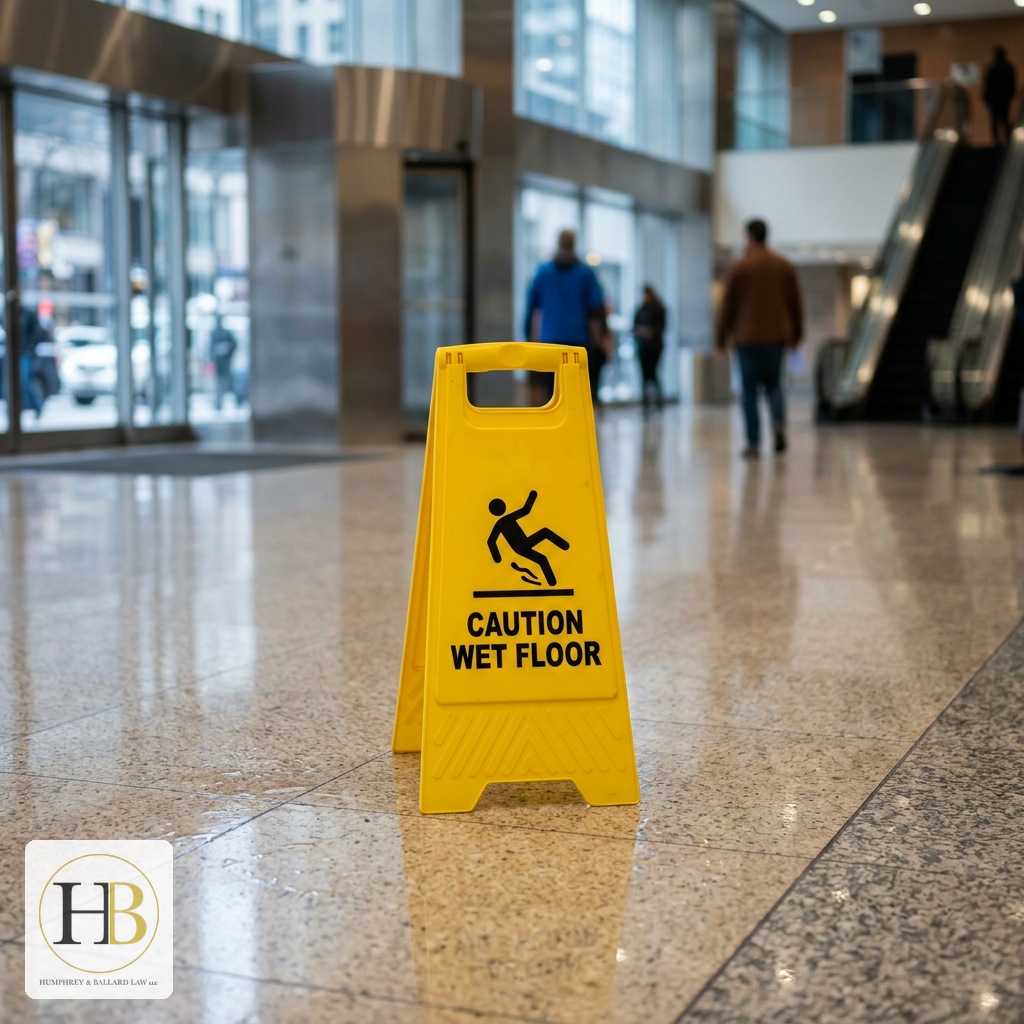
Slip and fall cases are deceptively challenging. Property owners and their insurers immediately start building defenses the moment an accident is reported. They’ll argue the hazard was “open and obvious,” that you weren’t watching where you were going, or that they had no notice of the dangerous condition. Without experienced Atlanta slip and fall attorneys on your side, these arguments can significantly reduce, or eliminate, your recovery. Georgia’s modified comparative negligence rule under O.C.G.A. § 51-11-7 means even a small assignment of fault to you reduces what you can recover.
The key to a strong slip and fall claim is acting fast. Evidence disappears quickly, surveillance footage gets overwritten, wet floor signs get moved, and witnesses forget details. The Atlanta premises liability attorneys at HB Injury Lawyers launch immediate investigations to preserve the evidence that wins these cases.
Georgia Premises Liability Law, What It Means for You
Georgia’s premises liability law (O.C.G.A. § 51-3-1) requires property owners to exercise ordinary care in maintaining their premises in a safe condition for lawful visitors. A person who is injured on someone else’s property due to a hazardous condition may recover damages, but only if the owner knew or should have known about the hazard and failed to correct it or warn visitors.
| Visitor Type | Duty of Care |
|---|---|
| Invitee, customers, shoppers, business visitors | Highest duty, must inspect, discover, and correct hazards or warn visitors |
| Licensee, social guests, invited visitors | Must warn of known hazards not obvious to visitor |
| Trespasser | Must not willfully or wantonly injure (lower duty) |
Common Atlanta Slip and Fall Accident Locations
- Grocery stores and supermarkets, spills, wet floors, debris in aisles
- Retail stores and malls, uneven flooring, poor lighting, cluttered walkways
- Restaurants, wet floors near entryways, spills near tables
- Apartment complexes, broken stairs, inadequate lighting, poorly maintained common areas
- Parking lots, potholes, cracked pavement, poor drainage causing ice or standing water
- Office buildings, wet floors, damaged carpet, broken handrails
- Government property, sidewalk defects, public building hazards
What You Must Prove in a Georgia Slip and Fall Case
| Element | What It Requires | Key Evidence |
|---|---|---|
| Duty of care | You were a lawful visitor on the property | Receipt, reservation, invitation, or public access |
| Breach of duty | Owner knew or should have known about the hazard | Prior incident reports, maintenance logs, inspection records |
| Causation | The hazard directly caused your fall and injuries | Surveillance footage, photos of the hazard, medical records |
| Damages | You suffered measurable physical or financial harm | ER records, treatment bills, lost wage documentation |
The “superior knowledge” doctrine in Georgia requires showing the property owner had greater knowledge of the hazard than you did. This is one reason why immediate evidence collection, incident reports, surveillance footage, and witness accounts, is so important after a slip and fall. An Atlanta slip and fall attorney from Humphrey & Ballard Law moves quickly to gather and preserve that evidence.
Notice: The Make-or-Break Element in Atlanta Slip and Fall Cases
The hardest element to prove in most slip and fall cases is notice, that the property owner knew or should have known about the hazardous condition. Georgia law recognizes two types:
- Actual notice: The owner or an employee directly knew about the hazard, they created it, reported it, or were told about it
- Constructive notice: The hazard existed long enough that a reasonable owner performing routine inspections should have discovered it
Constructive notice is often argued through time, if a spill existed for 45 minutes before you fell, a jury may find the store should have discovered and cleaned it. Surveillance footage is important here. Your Atlanta slip and fall attorney will subpoena that footage immediately, before it’s overwritten. Store inspection logs, cleaning schedules, and employee statements are also powerful evidence of whether reasonable maintenance procedures were followed. The National Safety Council’s fall prevention resources outline industry standards for hazard management that can establish what “reasonable care” looks like in specific settings.
Injuries in Atlanta Slip and Fall Accidents
🚑 Common Injuries
- Hip and pelvis fractures
- Wrist and hand fractures
- Knee injuries and tears
- Back and spinal injuries
- Head injuries and concussions
⚖ Severe Outcomes
- Traumatic brain injury
- Spinal cord damage
- Shoulder dislocation
- Permanent disability
- Wrongful death
What to Do After a Slip and Fall Accident in Atlanta
- Report the accident immediately, Get an incident report from the store manager or property owner before leaving. This creates an official record.
- Get medical attention right away, Even if you feel minor pain. Document all injuries from day one.
- Photograph the hazard, The wet floor, broken step, or debris that caused your fall, before it is cleaned up.
- Get witness names and contacts, Anyone who saw the fall or the hazardous condition.
- Preserve your clothing and shoes, Do not wash them. They may be evidence.
- Do not give recorded statements to the property owner’s insurer without an attorney.
Compensation Available in an Atlanta Slip and Fall Claim
- Medical expenses, emergency care, surgery, physical therapy, future medical needs
- Lost wages, income missed during recovery
- Reduced earning capacity, if injuries permanently affect your ability to work
- Pain and suffering, physical pain and emotional distress
- Permanent disability or disfigurement
- Loss of enjoyment of life, activities you can no longer do because of your injuries
Frequently Asked Questions
How long do I have to file a slip and fall claim in Georgia?Two years from the date of the accident under O.C.G.A. § 9-3-33. Act quickly, evidence disappears fast.
| Question | Answer |
|---|---|
| What if I didn’t see the hazard? | That actually supports your case. If the hazard was not obvious, the property owner had an obligation to warn you. The invisible-hazard defense strengthens your premises liability claim. |
| What if I was partly watching my phone? | Georgia’s comparative fault rule applies. If you are less than 50% at fault, you can still recover, though your percentage reduces your recovery. Your attorney argues your fault as low as possible. |
| How long do I have to file? | Two years from the date of your injury. For accidents on government property, special notice requirements apply with much shorter deadlines, contact us immediately. |
| How much does an Atlanta slip and fall attorney cost? | Nothing upfront. Humphrey & Ballard Law works on contingency, you pay nothing unless we win. |
| What if I was partially at fault for the fall? | You can still recover under Georgia’s comparative negligence rule as long as you were less than 50% at fault. Your award is reduced by your percentage of fault. |
| Do I need to report the accident to the property owner? | Yes, always report it in writing before leaving. Get a copy of the incident report. This creates an official record that the accident occurred. |
| What if there was a wet floor sign present? | A wet floor sign doesn’t automatically eliminate liability. The sign must be reasonably visible and placed before the fall, and even then, other factors may still support your claim. |
| Can I sue a government entity for a sidewalk fall in Atlanta? | Yes, but different rules apply. Claims against government entities require an ante-litem notice within 6,12 months. Miss this and your claim is barred. |
Helpful Resources
- Georgia Premises Liability Law, O.C.G.A. § 51-3
- CDC, Falls Prevention Data
- National Safety Council, Slip and Fall Safety
- OSHA, Slips, Trips and Falls Prevention
Holding Atlanta Property Owners Accountable
A slip and fall injury caused by someone else’s negligence deserves full compensation. Humphrey & Ballard Law fights for Atlanta injury victims with the evidence, strategy, and determination to win. Call or text 404-446-9854 or visit our Contact page for a free case evaluation.
About Humphrey & Ballard Law
Humphrey & Ballard Law is an Atlanta-based personal injury firm serving clients throughout Georgia. Founded by Desmond Humphrey and David Ballard, the firm handles slip and fall, premises liability, car accidents, wrongful death, and catastrophic injury cases on a contingency fee basis.
